
Trek the legendary Haute Randonnée Pyrénéenne (HRP) through the heart of the Pyrenees National Park.
The Pyrenees are a mountain range unlike any other in Europe—wilder than the Alps, greener than the Dolomites, and steeped in legends of shepherds and smugglers. Our Pyrenees High Route tour takes you on a spectacular 6-day traverse of the central sector, crossing high passes between France and Spain. We walk in the shadow of the iconic Pic du Midi d’Ossau, cross the dramatic majestic Vignemale glacier (the highest peak in the French Pyrenees), and finish at the UNESCO World Heritage site of the Cirque de Gavarnie.
This Land Only package is designed for experienced hikers who want to tackle the most scenic section of the HRP without the hassle of logistics. We stay in authentic mountain huts (refuges), enjoying hearty French mountain cuisine, and hike with a light backpack (carrying only personal gear for the week). This is pure trekking in its finest form.
Tour Type: Guided Mountain Trekking (Hut-to-Hut)
Difficulty: Demanding (Daily walks of 6–9 hours, significant elevation gain)
Group Size: Small group (Max 12 hikers)
Arrival at Lourdes Train Station or Tarbes-Lourdes-Pyrénées Airport (LDE). Please note: We organize ONE group transfer from Lourdes to the starting point (Gabas) on Day 1 (usually morning/mid-day). If you arrive later, you must arrange your own transport.
Join a group:
12.07.2026 – 19.07.2026
18.08.2026 – 25.08.2026
The HRP is a serious mountain trek. You need to be prepared for rugged terrain and changing weather.
DAY 1: Arrival
Arrival at Lourdes (Airport or Train Station). We gather for a group meeting and transfer by minibus to the hotel. We prepare our backpacks for the week. We enjoy a traditional French dinner and discuss the route ahead.
DAY 2: In the Shadow of the Giant: Refuge de Pombie
Transfer by minibus deep into the Ossau Valley to the village of Gabas or Lac de Bious-Artigues.
Our trek begins at Lac de Bious-Artigues. We hike through ancient beech forests and open pastures, circling the magnificent Pic du Midi d’Ossau (2,884m). The reflection of the peak in the lakes is a photographer’s dream. We climb the Col de Peyreget (2,300m) for panoramic views before descending to the Refuge de Pombie, perched directly under the sheer walls of the volcano. (Approx. 5-6 hours walking).
DAY 3: The Passage d’Orteig to Refuge Arrémoulit
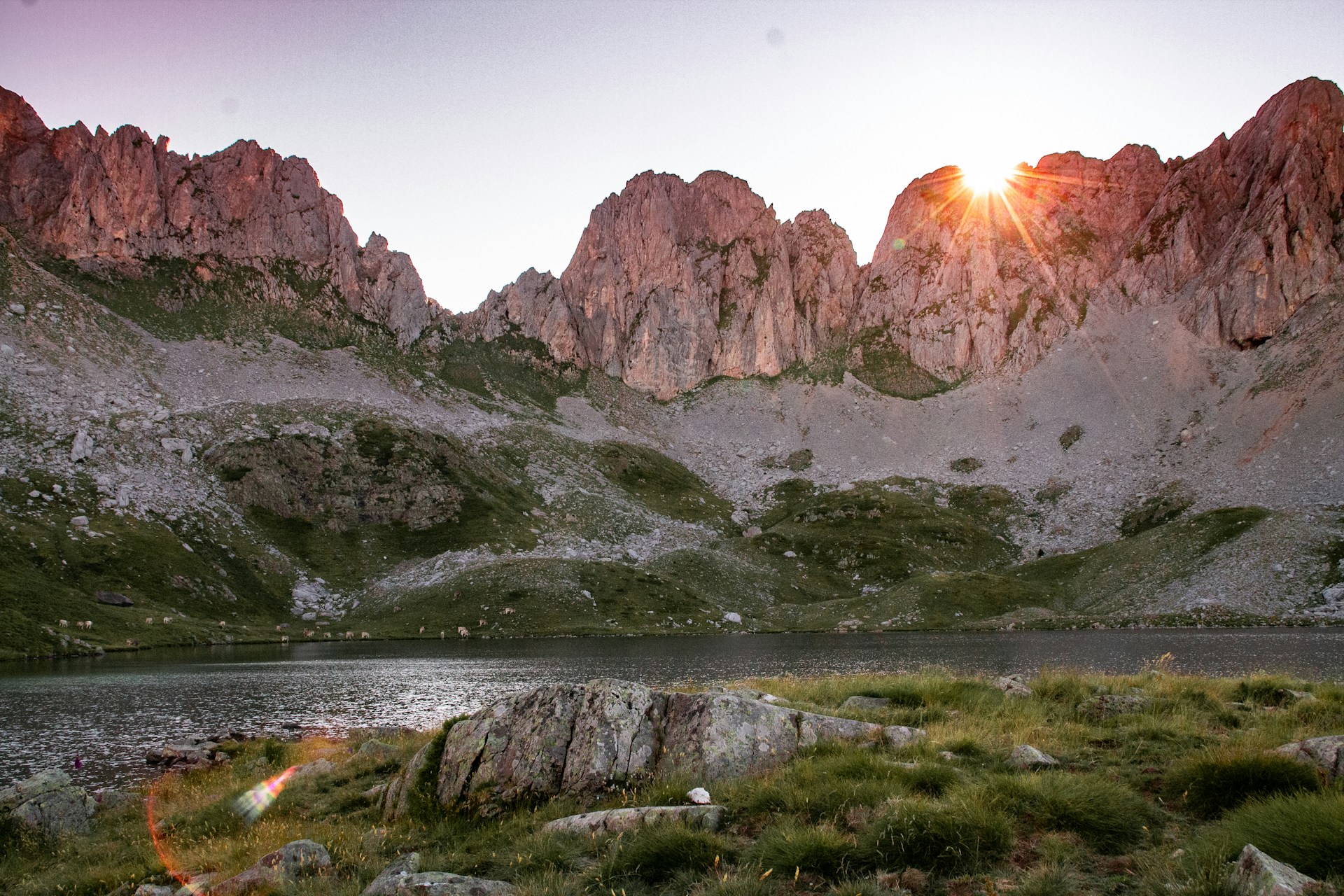
A thrilling day! We traverse towards the Col d’Arrious. For the adventurous, we cross the Passage d’Orteig, a narrow ledge cut into the cliff (secured with a handrail), offering an adrenaline rush and a shortcut to the Refuge d’Arrémoulit. This hut is spectacularly situated on a rocky peninsula in the middle of a high-altitude lake. We are now truly in the high mountains. (Approx. 5-6 hours walking).
DAY 4: Crossing into Spain: Col de la Fache
We cross the border into Spain via the Col de la Fache high pass. The landscape changes, becoming drier and more rugged. We may climb the Grande Fache (3,005m) if conditions allow, bagging our first 3,000m peak. We then descend into the Marcadau Valley towards the Wallon sector. (Approx. 9 hours walking).
DAY 5: The North Face of Vignemale and The Highest Hut: Refuge Bayssellance
We head back towards the French giants. We hike up the valley to the Oulettes de Gaube refuge. The view here is legendary: the sheer 800m North Face of the Vignemale rises vertically above the hut. It is one of the most impressive rock walls in the Pyrenees. We watch the sunset turn the limestone pink from the hut terrace. (Approx. 6 hours walking).
A challenging ascent takes us to the Hourquette d’Ossoue (2,734m), the highest pass of our trek. From here, we can opt to climb the Petit Vignemale (3,032m) for incredible views over the Ossoue Glacier. We stay at the historic Refuge Bayssellance, the highest guarded hut in the Pyrenees, originally built for the eccentric mountaineer Count Henry Russell. (Approx. 9 hours walking).
DAY 6: Descent to Gavarnie
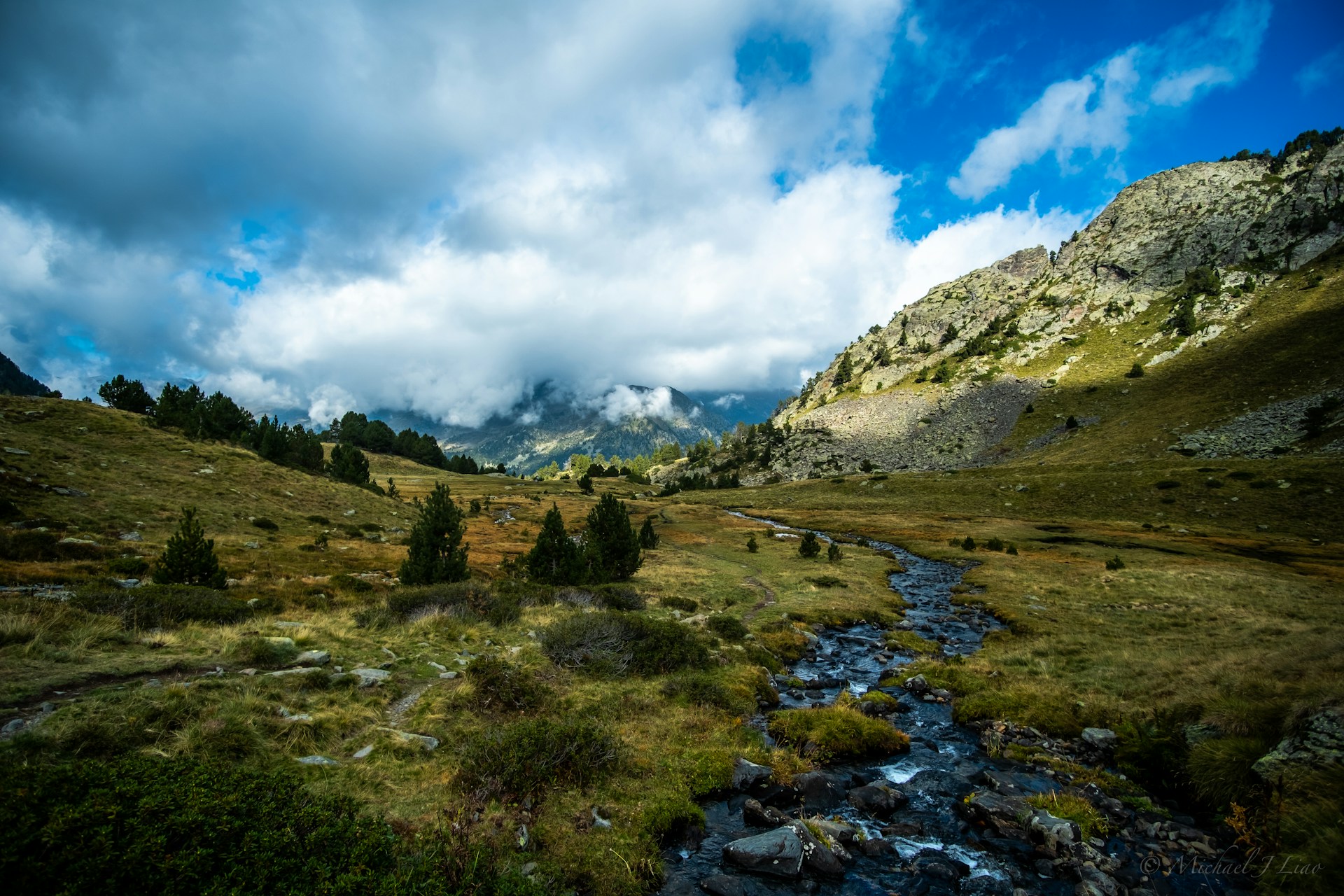
A spectacular descent through a green valley filled with rivers, wildflowers, and marmots, leading us to Gavarnie village, known for its breathtaking Cirque de Gavarnie, a UNESCO-listed natural amphitheater with the highest waterfall in Europe. This hut has electricity and even hot showers!
DAY 7: Cirque de Gavarnie & Return
The grand finale! The final day of trekking is easier, allowing us to hike without our backpacks if the hut keeper allows us to leave them behind. We head toward Plateau de Bellevue, offering one of the best panoramic views of the Cirque de Gavarnie and its waterfalls. If energy allows, we take a longer scenic route along the cliffs of the amphitheater. This massive limestone amphitheater, with its 400m waterfall, is a sight that defies scale. We finish our trek in the village of Gavarnie. After a celebratory drink, our bus collects us for the transfer back to Lourdes. (Approx. 6 hours walking).
DAY 8: Departure
After breakfast in Lourdes, the tour concludes. You can continue your travels in France or transfer to the airport/train station for your journey home.
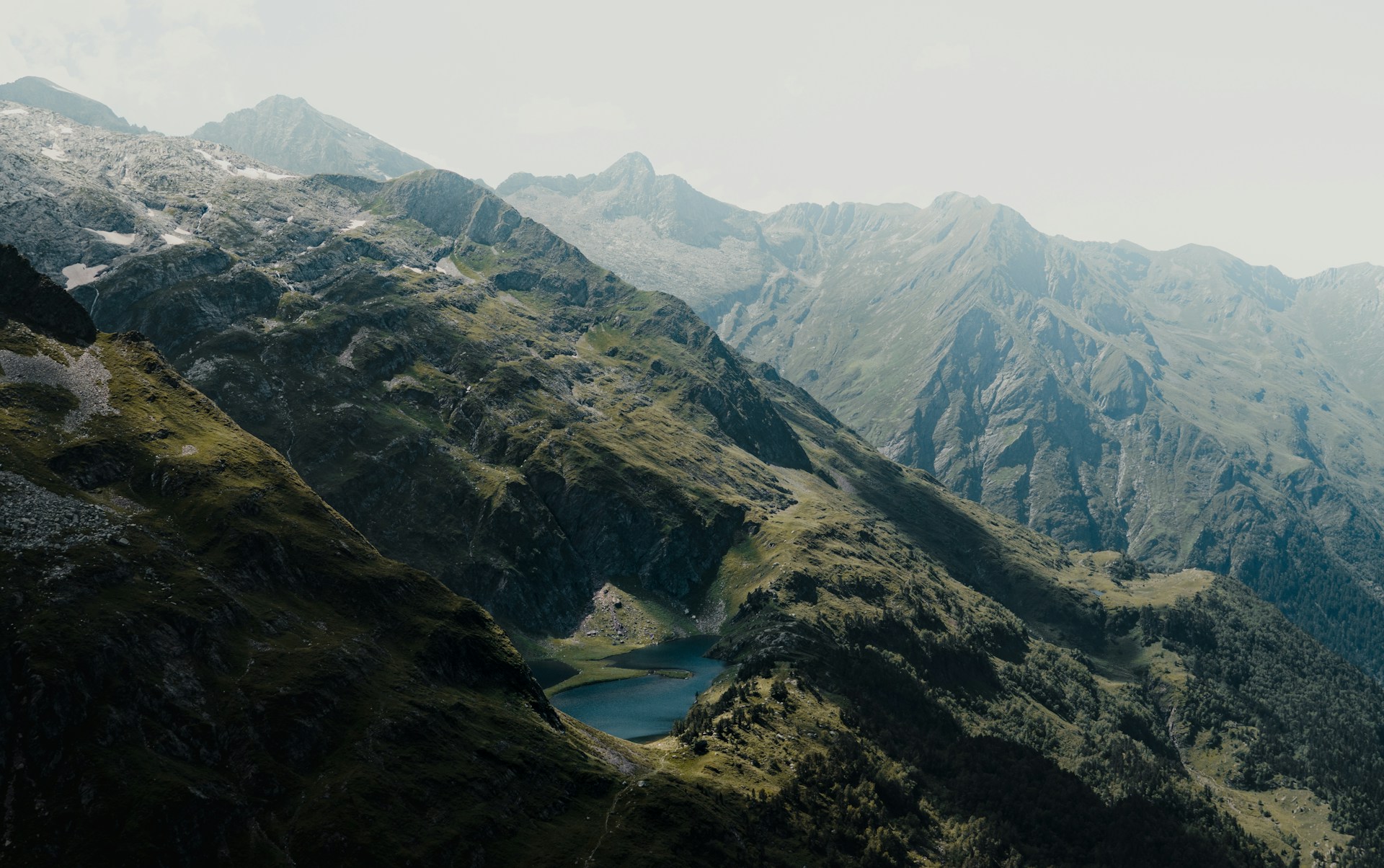
The Pyrenees form a natural barrier between France and Spain, stretching 430 kilometers from the Atlantic Ocean to the Mediterranean Sea. Within this jagged spine of limestone and granite lies one of the world’s great trekking routes: the Haute Randonnée Pyrénéenne (HRP), or the Pyrenees High Route. Unlike the GR10 (which stays in France) or the GR11 (which stays in Spain), the HRP follows the crest of the range, weaving back and forth across the border to find the highest, most scenic line possible.
The HRP is often called the “mountaineer’s trek.” It avoids the lower valleys and asphalt roads that sometimes interrupt the other long-distance trails. Instead, it stays high, crossing cols (passes) that often exceed 2,500 meters. This ensures that you are constantly surrounded by high-alpine scenery: glaciers, jagged ridges, and pristine glacial lakes. It is wilder, quieter, and more rugged than the Tour du Mont Blanc, offering a sense of solitude that is becoming rare in European mountains.
Our Land Only itinerary focuses on the absolute highlight of the entire range: the Central Pyrenees. This sector, protected by the Pyrenees National Park (Parc National des Pyrénées), contains the highest peaks, the biggest glaciers, and the most spectacular cirques.
Pic du Midi d’Ossau
Known as “Jean-Pierre” to the locals, this distinctive peak (2,884m) rises like a shark’s tooth from the surrounding lakes. It is an ancient stratovolcano and the symbol of the Béarn region. Our route takes us right around its base, offering reflections in the Lac de Bious-Artigues and Lac de Peyreget that are postcard-perfect. The Refuge de Pombie, where we stay, sits directly beneath its crumbling rock walls, offering a front-row seat to climbers tackling the face.
The Vignemale Massif
The Vignemale is the lord of the French Pyrenees. At 3,298 meters, Pique Longue is the highest summit. What makes it spectacular is its diversity: its North Face is a terrifying vertical wall of limestone, while its East Face holds the Ossoue Glacier, the second largest in the Pyrenees. We hike up the Gaube valley to witness the North Face, then cross the Hourquette d’Ossoue to see the glacier. We even offer the chance to summit the Petit Vignemale (3,032m), an accessible trekking peak that offers arguably the best panoramic view in the entire range.
Cirque de Gavarnie
Described by Victor Hugo as the “Colosseum of Nature,” the Cirque de Gavarnie is a UNESCO World Heritage site. It is a semicircular wall of rock, 1,500 meters high and 6 kilometers in circumference. Plunging from its upper rim is the Grande Cascade, which, at 422 meters, is the highest waterfall in mainland France and one of the highest in Europe. Finishing our trek here feels like walking into a cathedral of stone.
Trekking in the Pyrenees is defined by its Refuges. These are not hotels; they are mountain shelters run by guardians who live up there all summer. Life in a refuge is communal and cozy. You sleep in “dortoirs” (dormitories) on long bunk beds (bat flanc). The atmosphere is filled with the chatter of hikers from all over the world. Dinner is a highlight—the guardians pride themselves on cooking hearty meals like Garbure (a rich bean and duck soup) or sausage stews to refuel hungry hikers. It is a simple life, but waking up at 2,500 meters with a cup of coffee and the sunrise over the mountains is a luxury no hotel can match.
The Pyrenees are a sanctuary for wildlife. The most famous resident is the Isard, the Pyrenean cousin of the Chamois, which you will likely see bounding effortlessly across the scree. The piercing whistle of the Marmot will accompany you throughout the trek. Look up, and you might see the massive 2.8-meter wingspan of the Bearded Vulture (Lammergeier), a bone-eating bird that was successfully reintroduced to the Alps but never left the Pyrenees. In the forests, the rare Capercaillie hides, while the rivers are home to the Pyrenean Desman.
The HRP is not a walk in the park. The terrain is rougher than the Alps. Trails are often marked only by “cairns” (piles of stones) rather than painted flags. The weather is influenced by the Atlantic Ocean, meaning storms can roll in quickly. Good waterproof gear is essential. We recommend high-cut hiking boots to protect your ankles on the loose limestone (“lapiaz”) and scree. Trekking poles are highly recommended to save your knees on the long descents, particularly the drop from Bayssellance to Gavarnie (over 1,200m descent!).
By meeting us directly in Lourdes, you have total flexibility. You can fly into Toulouse (TLS) or Pau (PUF) in France, or even Barcelona (BCN) in Spain and take a bus/train across the border. You might choose to visit the famous sanctuary of Lourdes before the trek, or spend a few days surfing on the Atlantic coast near Biarritz afterwards. We handle the complex mountain logistics—booking the busy huts, arranging the transfers between valleys, and providing a qualified International Mountain Leader (IMLA) to ensure your safety on the high passes. All you need to do is get to Lourdes and start walking.
Join LifeTrek for the Pyrenees High Route, and discover why many hikers consider this the most beautiful mountain range in Europe. It is a challenge, yes, but the reward is a wilderness experience that stays with you forever.
8-day journey – 6 days of trekking – French Pyrenees National Park – numerous lakes, crystal-clear streams and rivers – lush alpine flora and daily marmot sightings – three different rock types – Cirque du Gavarnie – breathtaking views of Pic du Midi d’Ossau, Balaitous, and Vignemale, the most iconic peaks of the Pyrenees – accommodation in mountain huts – visit to the pilgrimage site of Lourdes – Pyrenees experts
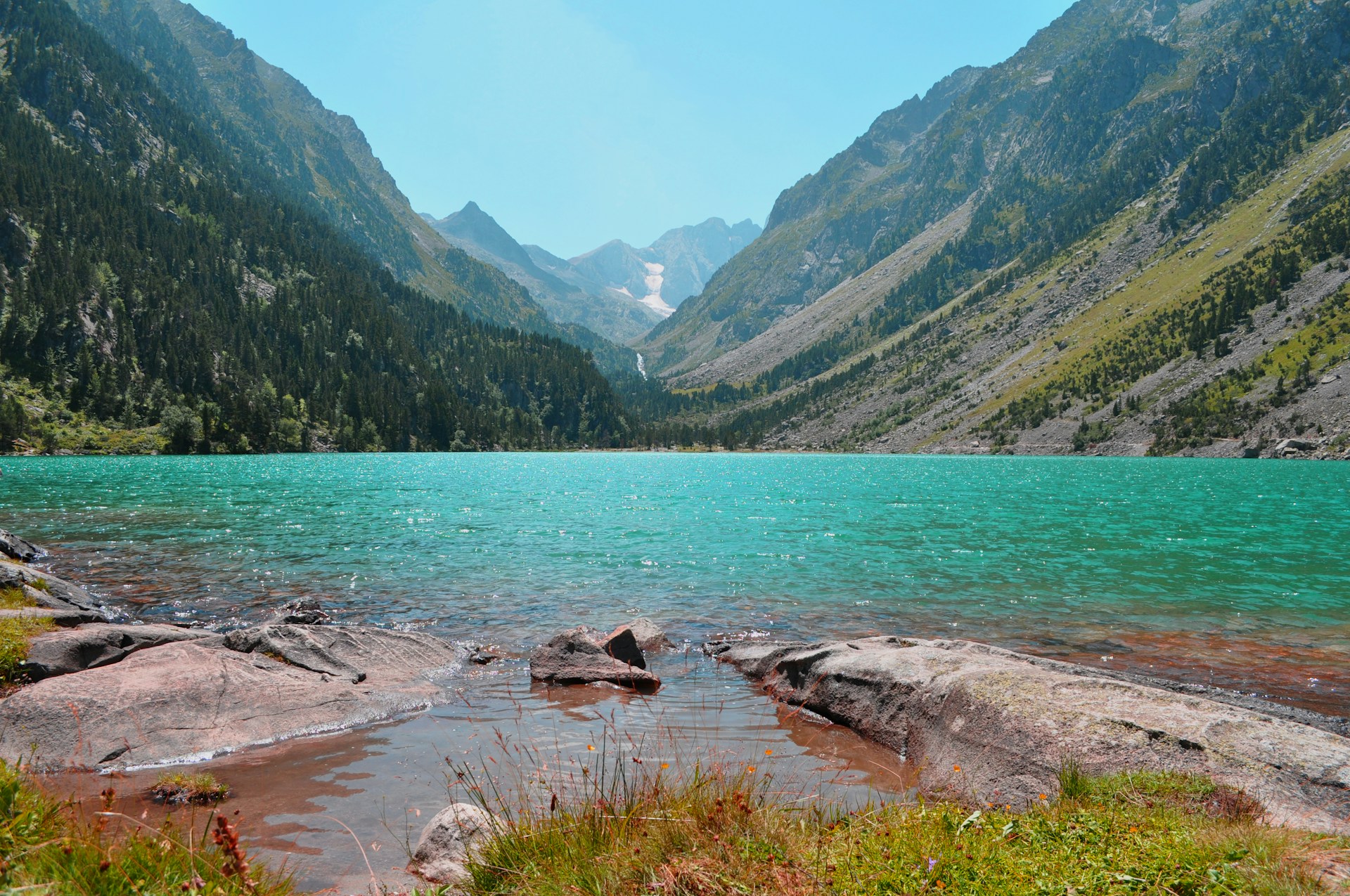
The Pyrenees National Park is one of six national parks in France, stretching 100 km along the French-Spanish border. The highest peak in the park is Vignemale, standing at 3,298 meters. The park offers incredible diversity, with peaks composed of limestone, conglomerate, and granite. Due to the harsh climate and ancient rock formations, the mountains are not sharp but rather smooth and weathered from heavy rainfall. Between the peaks lie vast valleys filled with granite boulders and an impressive 230 high-altitude lakes. The park also boasts stunning spruce forests and glacial waterfalls.
The high ridge of the Pyrenees is considered one of France’s premier trekking destinations, comparable to the High Sierra in the U.S. The eastern (French) side is lush and forested, while the western (Spanish) side is drier and grassier. The HRP (Haute Route Pyrénéenne) is the highest and most remote traverse of the Pyrenees, crossing the French-Spanish border multiple times. Completing the HRP is a significant challenge for those undertaking long-distance hikes in Europe. Along the way, you’ll experience wilderness, solitude, breathtaking landscapes, and pristine mountain lakes.
Based on our long experience in the Pyrenees, we have chosen the best periods for trekking, with minimal chances of prolonged rain or storms. However, occasional showers are possible. Temperatures can be high in the valleys (up to 35°C in Lourdes), while in the mountains, they generally range between 15–20°C.
Meals are not included in the package price but can be purchased at each hut.
Most huts do not have electricity, except for the one in Gavarnie. There is limited phone signal on the route, and from Day 2 to Day 6, there will be no phone or internet access. We recommend keeping your phone in airplane mode to conserve battery.
All participants must have valid Alpine Club (PZS) membership or purchase additional insurance (€75). Standard travel insurance does not cover trekking above 3,000 m, so please ensure your coverage includes high-altitude hiking.
This trek can also be done as a self-guided tour, with options to extend the trip to Bilbao (Basque Country) or Bordeaux (Atlantic coast).