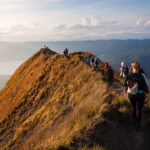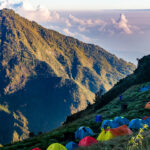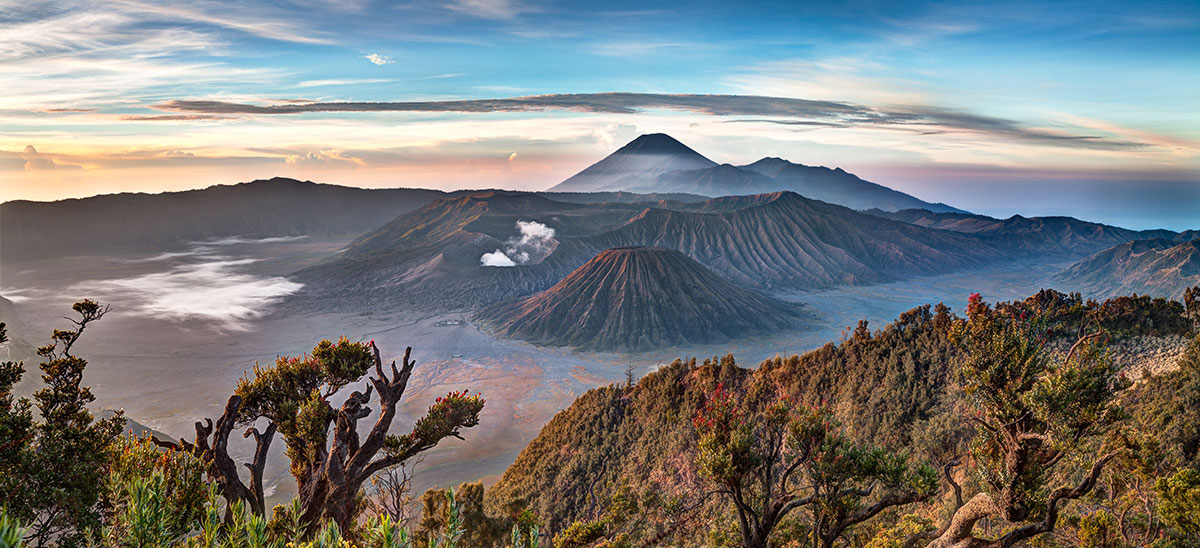
Indonesia is a country where trekking means climbing active volcanoes, crossing lava fields and watching the sun rise above vast crater rims. Few places on Earth combine such raw geological power with tropical landscapes.
Indonesia is one of the most extraordinary trekking destinations in the world. Spread across more than 17,000 islands, the country lies along the Pacific Ring of Fire, a vast geological zone responsible for hundreds of volcanoes and some of the most dramatic landscapes on Earth. For hikers, this creates a trekking environment unlike anywhere else: towering volcanic peaks, steaming crater rims, lush rainforest slopes and sunrise summits above the clouds.
Unlike traditional alpine trekking regions such as the Himalayas or the Alps, many hikes in Indonesia are shorter but far more intense. Trails often climb steep volcanic slopes made of loose ash and gravel, while tropical heat and humidity add another layer of physical challenge. Reaching the summit of a volcano frequently involves starting in the dark, hiking through the night and arriving just in time to watch the sun rise above a sea of clouds.
Some of Southeast Asia’s most iconic treks are found here. Climbs such as Mount Rinjani in Lombok, Mount Semeru in East Java and Mount Kerinci in Sumatra attract trekkers from around the world with their spectacular scenery and rewarding summit views. Even shorter hikes like Mount Bromo or the crater trek at Mount Ijen offer unforgettable volcanic landscapes.
With its combination of geological drama, tropical ecosystems and culturally rich mountain regions, Indonesia offers one of the most distinctive trekking experiences anywhere in Asia.
Indonesia Trekking at a Glance
Indonesia offers a wide variety of trekking experiences, from challenging volcano climbs to rainforest mountain routes. While the country’s geography and climate vary across its thousands of islands, several key characteristics define trekking throughout the archipelago.
The overview below highlights the main features trekkers should know before planning a hiking trip in Indonesia.
| Feature | Details |
| Best trekking season | April – October (dry season) |
| Terrain | Volcanoes, crater rims, rainforest mountains |
| Highest trekking peaks | Mount Kerinci (3,805 m), Mount Rinjani (3,726 m), Mount Semeru (3,676 m) |
| Typical trek duration | 1–4 days |
| Trek style | Volcano climbs, jungle trekking, sunrise summit hikes |
| Difficulty | Moderate to challenging depending on route |
Because Indonesia lies close to the equator, temperatures remain warm throughout the year. The dry season from April to October generally provides the most reliable trekking conditions, particularly on higher volcano routes where heavy rainfall can make trails muddy and unstable.
Another distinctive aspect of trekking in Indonesia is the sunrise summit tradition. Many volcano climbs begin during the night so hikers can reach the summit at dawn, when cooler temperatures and clear skies reveal sweeping views across volcanic landscapes.
Read also: Trekking in Southeast Asia: Complete Guide (2026)
Why Indonesia Is One of the World’s Most Unique Trekking Destinations
Indonesia stands apart from most trekking regions because of its extraordinary geological diversity and tropical ecosystems. Few countries offer such a dramatic combination of active volcanoes, rainforest mountains and culturally rich landscapes within a single trekking destination.
The Pacific Ring of Fire
Indonesia lies along the Pacific Ring of Fire, a vast tectonic belt responsible for many of the world’s earthquakes and volcanic eruptions. As a result, the country contains more than 130 active volcanoes, the highest number of any nation on Earth. For trekkers, this creates a rare opportunity to climb volcanic peaks that remain geologically alive, with steaming vents, crater lakes and constantly evolving landscapes.
Dramatic volcanic landscapes
The volcanoes of Indonesia produce landscapes unlike those found in typical alpine mountain ranges. Instead of glaciers or jagged rock spires, hikers often encounter vast calderas, black lava fields and crater rims overlooking turquoise volcanic lakes. Treks such as Mount Rinjani in Lombok or Mount Bromo in East Java reveal terrain shaped by eruptions and centuries of volcanic activity.
These environments can feel almost otherworldly. Hiking across ash plains or climbing steep slopes of loose volcanic gravel provides a completely different experience from traditional mountain trekking.
Rainforest ecosystems
Many Indonesian mountains are covered in dense tropical rainforest at lower elevations. Trails frequently begin in humid jungle environments filled with tall ferns, moss-covered trees and abundant wildlife before gradually transitioning into alpine volcanic terrain near the summit.
National parks such as Kerinci Seblat in Sumatra protect some of the most biologically diverse forests in Southeast Asia, where trekkers may encounter rare bird species, primates and unique plant life.
Cultural mountain landscapes
Indonesia’s volcanoes are not isolated wilderness areas. Many are surrounded by rural communities whose lives are closely connected to the mountains. Farmers cultivate vegetables and rice on the fertile volcanic soil, creating terraced landscapes along the lower slopes.
As a result, trekking routes often pass through villages, farmland and traditional settlements, offering a blend of natural scenery and cultural experience that distinguishes Indonesia from many other trekking destinations.
Best Trekking Regions in Indonesia
Indonesia’s vast archipelago offers trekking environments that vary significantly from island to island. Some regions are known for their dramatic volcano climbs, while others feature rainforest mountains or remote expedition routes. Understanding these regional differences helps trekkers choose the landscapes and trekking styles that best match their interests and experience level.
1. Java: Indonesia’s volcanic heartland
Java is the centre of Indonesia’s most famous volcano trekking routes. The island forms part of a long volcanic chain that includes some of the most active and visually striking peaks in Southeast Asia.
Among the highlights is Mount Semeru, the highest mountain in Java at 3,676 meters. The trek crosses volcanic plains and alpine landscapes before reaching the summit cone of one of Indonesia’s most active volcanoes. Nearby, Mount Bromo offers one of the most iconic sunrise views in the country, with its crater rising above a vast volcanic sand sea.
Another popular destination is Mount Ijen, famous for its turquoise crater lake and the rare “blue fire” phenomenon caused by burning sulfur gases. These routes make Java one of the easiest and most diverse islands for volcano trekking.
2. Lombok: The Mount Rinjani trek

The island of Lombok is dominated by Mount Rinjani, Indonesia’s second-highest volcano at 3,726 meters. Rinjani is widely considered one of the most spectacular trekking routes in Southeast Asia.
Most treks take two to four days and include camping along the crater rim with views of the turquoise Segara Anak crater lake far below. The final summit push typically begins before dawn and involves a steep ascent across loose volcanic gravel.
3. Sumatra: Remote rainforest mountains
Sumatra offers a more remote and adventurous trekking environment. The island’s volcanoes rise from dense rainforest landscapes, creating treks that combine jungle hiking with high mountain summits.
The most famous climb is Mount Kerinci, Indonesia’s highest volcano at 3,805 meters. Located within Kerinci Seblat National Park, the trek passes through lush rainforest before emerging onto exposed volcanic slopes near the summit.
4. Bali: Accessible volcano climbs
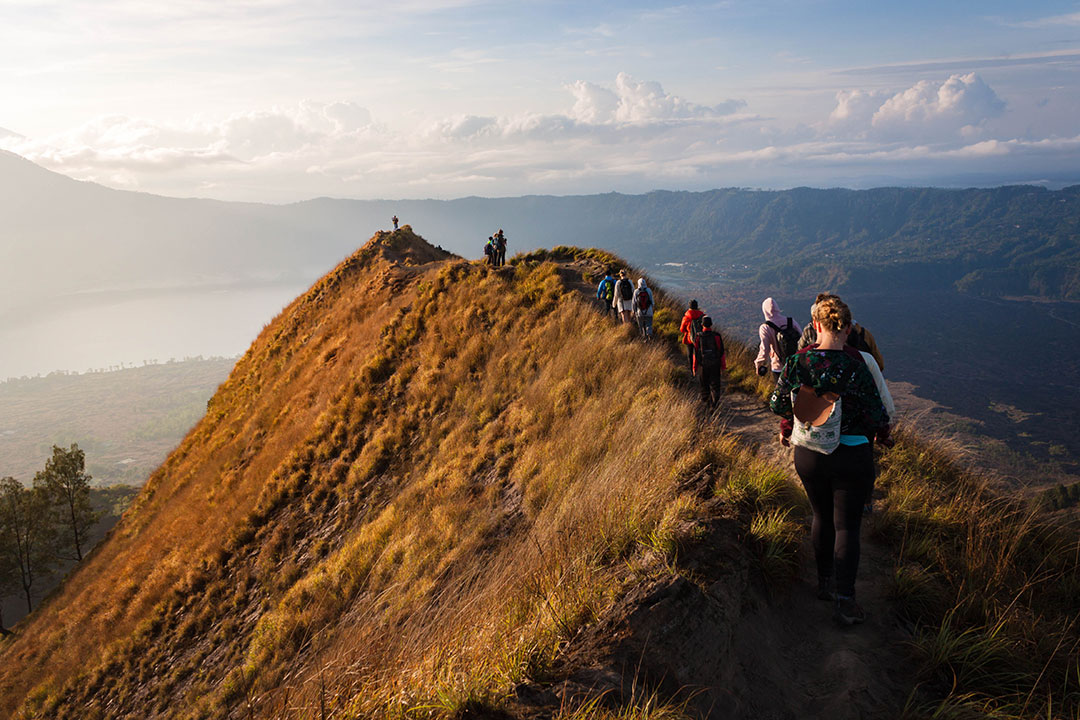
Although Bali is better known for its beaches and temples, the island also offers memorable volcano hikes. Mount Batur is the most popular trek, attracting hikers who climb before dawn to watch the sunrise from the summit.
More experienced trekkers sometimes attempt Mount Agung, Bali’s highest peak. The climb is steeper and more demanding but rewards hikers with sweeping views across the island and surrounding seas.
Papua: Expedition-level trekking
For those seeking extreme adventure, Indonesia’s easternmost region offers one of the most challenging climbs in Asia: Carstensz Pyramid (Puncak Jaya). Rising to 4,884 meters, it is the highest mountain in Indonesia and one of the famed Seven Summits.
Reaching the peak requires technical climbing skills and access through remote rainforest terrain, making it a true expedition rather than a standard trekking route.
Best Treks in Indonesia (Quick Overview)
Indonesia’s volcanic landscapes create some of the most memorable trekking routes in Southeast Asia. Many of the country’s most famous hikes involve climbing active or dormant volcanoes, often culminating in sunrise views above crater lakes, lava fields or surrounding islands.
The following routes are among the most popular and rewarding treks across the Indonesian archipelago.
| Trek | Island | Duration | Difficulty | Highlight |
| Mount Rinjani | Lombok | 2–4 days | Hard | Crater lake and sunrise summit |
| Mount Semeru | Java | 3–4 days | Hard | Indonesia’s most active volcano |
| Mount Bromo | Java | 1 day | Easy | Iconic sunrise volcano landscape |
| Mount Ijen | Java | 1 day | Moderate | Blue fire crater and sulfur lake |
| Mount Kerinci | Sumatra | 2–3 days | Hard | Highest volcano in Indonesia |
- Mount Rinjani is widely regarded as Indonesia’s most spectacular volcano trek. Multi-day routes lead along the crater rim before descending toward the turquoise Segara Anak lake, followed by a demanding summit climb at sunrise.
- Mount Semeru, located within Bromo Tengger Semeru National Park, is another legendary route. The trek crosses volcanic plains and alpine terrain before reaching the summit cone, where ash clouds from the active crater can sometimes be seen erupting into the sky.
- Shorter hikes such as Mount Bromo and Mount Ijen are also extremely popular because they provide dramatic volcanic scenery without requiring multi-day trekking. Meanwhile, Mount Kerinci offers one of the most challenging climbs in the country, rising above the rainforest landscapes of Sumatra.
When to Go Trekking in Indonesia
Because Indonesia lies close to the equator, temperatures remain warm throughout the year. However, rainfall patterns strongly influence trekking conditions, making seasonal timing an important factor when planning hikes across the archipelago.
Dry season (April–October)
The dry season from April to October is generally considered the best period for trekking in Indonesia. During these months, rainfall is lower, trails are more stable and visibility from volcanic summits is usually clearer.
This is also the most popular time to climb major peaks such as Mount Rinjani, Mount Semeru and Mount Kerinci, when drier conditions make steep volcanic slopes safer and easier to navigate.
Clearer skies during the dry season also improve the experience of sunrise summit climbs, allowing trekkers to enjoy sweeping views across calderas, crater lakes and surrounding islands.
Wet season (November–March)
The wet season, which typically lasts from November to March, brings heavier rainfall to many parts of Indonesia. While trekking is still possible in some regions, trails can become muddy and slippery, especially on volcano routes made of loose ash or gravel.
Storms and cloud cover are also more common, which may limit visibility from summits.
However, rainforest trekking in certain areas can still be rewarding during this period, as landscapes become especially lush and rivers and waterfalls are at their most dramatic.
Regional climate differences
Indonesia’s vast geography means weather conditions can vary between islands. Eastern regions often experience slightly different rainfall patterns from western islands, and local microclimates may influence trekking conditions on specific mountains.
For this reason, it is always advisable to check current weather conditions and local park regulations before attempting major treks, particularly on active volcanoes.
How Difficult Is Trekking in Indonesia?
Most trekking routes in Indonesia are considered non-technical, meaning they do not require specialised mountaineering equipment such as ropes or climbing gear. However, many volcano hikes can still be physically demanding due to steep terrain, tropical conditions and rapid elevation gain.
Several factors influence the difficulty of trekking in Indonesia:
- Steep volcanic ascents: Many volcano trails climb directly up loose slopes of ash, sand or volcanic gravel, which can make progress slower and more exhausting than typical mountain paths.
- Rapid elevation gain: Routes such as Mount Rinjani, Mount Semeru and Mount Kerinci involve climbing more than 1,500–2,000 meters in a relatively short distance.
- Loose terrain: Volcanic landscapes often consist of unstable gravel or sand, making both ascents and descents more challenging.
- Tropical heat and humidity: Warm temperatures and high humidity can increase physical strain, particularly at lower elevations.
- Night summit climbs: Many volcano treks begin before midnight so hikers can reach the summit at sunrise, adding an additional endurance element.
Despite these challenges, most Indonesian volcano treks remain accessible to hikers with moderate to good fitness levels. Multi-day climbs such as Rinjani or Semeru are considered strenuous, while shorter hikes like Mount Batur or Mount Bromo are achievable for most travellers.
Preparation, pacing and proper hydration are often more important than technical climbing ability when trekking in Indonesia’s volcanic landscapes.
What a Typical Volcano Trek Looks Like
Trekking in Indonesia often follows a rhythm that is quite different from hiking in alpine regions. Instead of long multi-day journeys between mountain huts, many Indonesian treks focus on steep ascents to volcanic summits, frequently timed to reach the top at sunrise.
A typical volcano trek in Indonesia often includes:
- Late-night or early-morning starts, allowing hikers to reach the summit at sunrise
- Steep climbs on volcanic slopes made of loose ash, sand or gravel
- Camping near crater rims or staying in basic mountain shelters on multi-day treks
- Guided trekking teams, often supported by porters carrying equipment and food
- Dramatic summit views overlooking calderas, crater lakes and neighbouring volcanoes
For example, multi-day climbs such as Mount Rinjani usually begin in the afternoon with a gradual ascent to a crater rim campsite. Trekkers spend the night in tents before starting the summit push around midnight or 2 a.m., reaching the top just as the sun rises over the surrounding islands.
On other mountains, such as Mount Bromo or Mount Batur, the trekking experience is shorter but follows a similar pattern. Hikers typically begin before dawn, reach the summit viewpoint for sunrise and descend later in the morning.
Because many volcano routes involve loose terrain and steep slopes, descents can sometimes feel more challenging than the climb itself. Careful footing and a steady pace are essential, particularly on gravel sections where the ground shifts underfoot.
Trekking Logistics & Practical Planning
Organising a trek in Indonesia is usually straightforward, especially on the country’s most popular volcano routes. However, logistics can vary depending on the mountain, national park regulations and the remoteness of the region.
Guides and permits
Many major trekking areas in Indonesia are located within national parks and require entry permits or registration before starting the hike. On some mountains, particularly Mount Rinjani, trekking with a licensed guide is mandatory.
Guides are not only familiar with the trails but also help manage logistics such as campsite setup, cooking and navigation, which can be especially useful on routes with limited signage.
Booking trekking tours
For well-known volcanoes, treks are commonly organised through local trekking agencies. These packages typically include transportation to the trailhead, park permits, camping equipment and food during the trek.
On multi-day climbs such as Rinjani or Semeru, trekking teams often include porters who carry tents, cooking supplies and water, allowing hikers to focus primarily on the climb.
Access to trailheads
Indonesia’s major trekking regions are generally accessible from the country’s main travel hubs. Surabaya serves as a gateway to volcano treks in East Java, including Mount Bromo, Semeru and Ijen. Lombok International Airport provides access to Mount Rinjani, while Medan is the starting point for trekking in northern Sumatra, including Mount Kerinci.
Because travel between islands may involve flights or long ferry journeys, planning transport in advance is an important part of organising a trekking itinerary in Indonesia.
Safety Considerations
Trekking in Indonesia is generally safe, but the country’s volcanic landscapes and tropical climate require careful preparation. Understanding the main environmental risks helps ensure a safer and more enjoyable trekking experience.
The most important factors trekkers should be aware of include:
- Volcanic activity: Indonesia has more than 130 active volcanoes, and some mountains may close temporarily if eruptions or increased activity are detected.
- Rapid weather changes: Even during the dry season, sudden rain or cloud cover can affect visibility and make trails slippery.
- Steep volcanic terrain: Loose gravel and ash slopes can be unstable, especially during descents.
- Altitude effects: Peaks such as Mount Rinjani, Semeru and Kerinci rise above 3,500 meters, where some hikers may experience mild altitude symptoms.
Local authorities closely monitor volcanic conditions, and trekkers should always check park updates before starting a climb. Hiring experienced guides on major routes can also improve safety, particularly on unfamiliar terrain.
Who Should Trek in Indonesia?
Indonesia is an excellent trekking destination for travellers who enjoy dramatic landscapes and adventurous climbs. The country’s volcano routes offer a unique mix of natural scenery and physical challenge that appeals to a wide range of hikers.
Indonesia is particularly well suited for:
- Volcano enthusiasts interested in climbing active or dormant peaks
- Adventure travellers seeking dramatic landscapes and unusual trekking environments
- Photographers drawn to sunrise views above crater lakes and volcanic calderas
- Trekkers with limited time, as many climbs can be completed in one to four days
Because many routes involve steep terrain and warm tropical conditions, Indonesia tends to appeal most to hikers who enjoy short but intense mountain adventures rather than long, gradual alpine treks.
Final Thoughts
Indonesia offers one of the most distinctive trekking experiences anywhere in Asia. From towering volcanoes and crater lakes to rainforest-covered mountains, the country’s landscapes provide an extraordinary setting for adventure.
What makes trekking here truly special is the combination of dramatic geology and cultural landscapes. Trails often pass through rural villages, fertile volcanic valleys and national parks rich in biodiversity before reaching rugged mountain summits.
For travellers willing to embrace steep terrain and tropical conditions, Indonesia delivers unforgettable hiking experiences. Whether climbing a volcano at sunrise or trekking through remote rainforest mountains, the archipelago remains one of Southeast Asia’s most rewarding destinations for adventurous hikers.