

Rising to 5,054 metres, Mt. Kazbek is one of the Caucasus’ most iconic peaks — and one of its most underestimated. While often described as “non-technical,” it remains a serious glaciated climb where preparation and judgment matter more than strength.
Mount Kazbek dominates the skyline above Stepantsminda and attracts climbers from around the world looking to summit their first 5,000-metre peak. From a distance, the mountain appears deceptively straightforward: a broad cone, a well-known route, and no exposed rock climbing on the standard ascent. This reputation has led many to assume Kazbek is an advanced hike rather than a true mountaineering objective.
In reality, climbing Mt. Kazbek is not hiking. The mountain involves glacier travel, crevasse risk, sustained altitude above 4,000 metres and highly volatile weather. Even on the normal route, climbers must manage rope systems, make conservative turnaround decisions and cope with conditions that can change rapidly.
This guide is written for those considering a Kazbek ascent and wanting a realistic understanding of what the climb involves. It focuses on routes, altitude, weather patterns, safety risks and decision-making — not on summit hype. If you are asking whether Kazbek is achievable for you, and under what conditions, this article will help you assess that honestly.
What Makes Mount Kazbek a Serious Climb
Mt. Kazbek is often described as a “non-technical” peak, but that label can be misleading. While the standard route does not require rock climbing or ice pitches, it is still a full alpine ascent with objective hazards that cannot be ignored.
- Altitude: The most significant factor. At over 5,000 metres, Kazbek pushes climbers into a zone where oxygen levels are dramatically reduced. Fatigue, poor sleep and slowed decision-making are common above 4,000 metres, even for fit individuals. Many failed summit attempts are caused not by terrain but by inadequate acclimatisation.
- Glacier travel: Large sections of the route cross glaciated terrain, where crevasses are present every season. Snow bridges can collapse without warning, particularly later in summer. Knowing how to travel roped, recognize hazards and perform basic rescue procedures is essential for anyone attempting the climb without a guide.
- Weather adds another layer of seriousness. Kazbek generates its own conditions, with clouds, wind and whiteouts forming quickly, especially during summit attempts. Visibility can drop to zero within minutes, turning a straightforward ascent into a navigational challenge.
- Rescue options are limited: Once above Bethlemi Hut, evacuation is slow and dependent on weather. On Kazbek, conservative decisions and early turnarounds are not signs of weakness — they are key survival skills.
Mount Kazbek Routes Overview (What Climbers Actually Use)
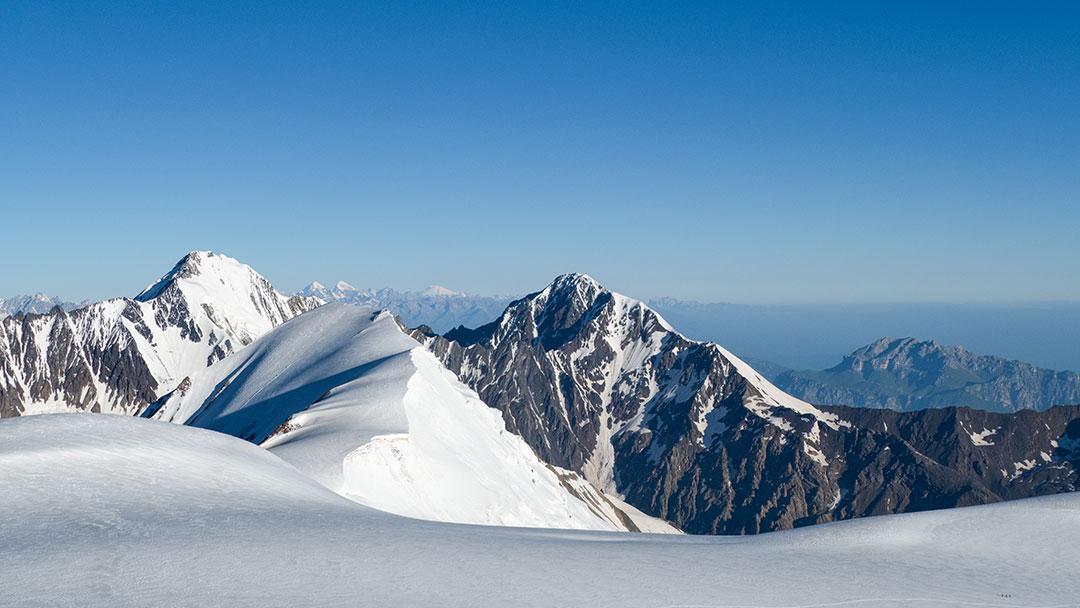
Although Mount Kazbek has multiple faces and historical lines, the reality for modern climbers is simple: almost all ascents use a single route. Understanding this route — and what it involves — is far more important than knowing alternative lines that are rarely practical.
The vast majority of climbers approach Kazbek from the south side, starting in Stepantsminda and ascending via the Gergeti Trinity Church to Bethlemi Hut (also known as the Meteo Station). This route is considered the “normal route,” but it still involves glacier travel, crevasse exposure and sustained altitude.
Other routes exist, including technically more demanding options and approaches from the Russian side, but these are used almost exclusively by experienced alpinists with advanced logistics. For most climbers visiting Georgia, they are not realistic alternatives and should not factor into planning.
What matters is understanding the altitude progression and decision points along the standard route, where acclimatisation happens, and where the most serious risks begin.
Mt. Kazbek: Typical Altitude Stages on the Standard Route
| Stage | Approx. Altitude | Role in the Climb | Key Considerations |
| Stepantsminda | ~1,700 m | Starting point | No acclimatisation yet |
| Gergeti Trinity Church | ~2,170 m | First ascent | Overexertion early on |
| Bethlemi Hut (Meteo) | ~3,650 m | Acclimatization base | AMS symptoms, poor sleep |
| Upper glacier zone | 4,200–4,600 m | Summit push | Crevasses, fatigue |
| Summit | 5,054 m | Objective | Weather, decision-making |
This table illustrates altitude exposure, not a fixed itinerary. Actual timing and success depend on acclimatisation, weather and individual condition.
The Standard Route via Bethlemi Hut (Step-by-Step)
The standard ascent of Mt. Kazbek follows a clear line from Stepantsminda to the summit, but clarity on a map does not equal simplicity on the mountain. Each stage presents different challenges, and mistakes made early often compound higher up.
1. Stepantsminda → Gergeti Trinity Church
The climb begins above the town of Stepantsminda, where most climbers spend at least one night before starting their ascent. From here, the trail climbs steeply toward Gergeti Trinity Church, a familiar landmark already described in hiking guides — but for climbers, this is not a sightseeing walk.
The ascent gains significant elevation quickly, and many climbers push too hard at this stage. Overexertion here can undermine acclimatisation later, especially for those arriving from low altitude. A slow, controlled pace is critical, even though the terrain itself is straightforward.
The weather can already influence progress. Strong winds and low cloud frequently form along the ridge, and visibility toward Kazbek can disappear early in the day. Treat this stage as a transition from trekking to mountaineering mindset, not a warm-up.
2. Gergeti → Bethlemi Hut (Meteo Station)
Beyond the church, the route becomes steeper and more exposed. The landscape shifts from grassy slopes to rocky terrain, and the sense of altitude becomes more pronounced. Bethlemi Hut sits at approximately 3,650 metres and serves as the primary acclimatisation base for climbers.
Reaching the hut often takes longer than expected, particularly in poor weather. Fatigue, dehydration and mild altitude symptoms are common on arrival. Most climbers spend at least one night here, and many benefit from an additional acclimatisation day.
Conditions at the hut can be harsh. Temperatures drop sharply at night, sleep is often poor, and weather can change suddenly. This is where climbers must begin making serious decisions about whether their bodies are adapting well enough to continue.
3. Summit Push (Glacier Travel & Final Ascent)
The summit attempt typically begins very early, often before dawn. From Bethlemi Hut, climbers rope up and enter glaciated terrain where crevasses are present every season. Snow bridges may appear solid but can collapse without warning, especially later in summer.
Progress above 4,000 metres is slow and deliberate. Breathing becomes laboured, coordination decreases, and decision-making is impaired. Weather plays a decisive role here: wind, cloud and whiteout conditions can force a retreat even when the summit is close.
The final ascent involves a sustained climb on snow and ice rather than a dramatic summit ridge. Many climbers turn back within a few hundred metres of the top, not because of technical difficulty, but because conditions no longer allow a safe descent.
4. Descent & Turnaround Decisions
On Mt. Kazbek, the descent is often more dangerous than the ascent. Fatigue, warming snow bridges and changing weather increase risk rapidly after midday. Successful climbers prioritize turnaround times, not summit photos.
Turning back is a normal and necessary outcome on Kazbek. Experienced climbers understand that reaching the summit is optional; returning safely is not. Good judgment here is the defining skill of a safe Kazbek ascent.
Altitude & Acclimatisation on Mount Kazbek
Altitude is the single most common reason climbers fail to summit Mt. Kazbek — and the most frequent factor in accidents. While the standard route is technically straightforward, it reaches heights where the human body struggles to adapt, especially without proper preparation.
Above 3,000 metres, oxygen availability drops significantly. At Bethlemi Hut, many climbers experience symptoms of acute mountain sickness (AMS) such as headaches, nausea, poor sleep and loss of appetite. These symptoms are not a sign of weakness; they are a physiological response to reduced oxygen pressure.
A common mistake is assuming that fitness alone will compensate for lack of acclimatisation. In reality, even highly trained individuals can struggle at altitude if they ascend too quickly. The body needs time to adjust, and skipping acclimatization days dramatically increases the risk of failure or forced retreat.
Most successful ascents include at least one acclimatisation night at Bethlemi Hut, with some climbers benefiting from an additional rest or acclimatisation hike before attempting the summit. Listening to how your body responds is crucial. Persistent symptoms, worsening headaches or dizziness are clear signs that continuing upward is unsafe.
On Mt. Kazbek, acclimatisation is not something you “push through.” It is a process that determines whether the climb remains manageable or becomes dangerous.
Weather on Mount Kazbek (Why Timing Matters More Than Strength)
Weather is often the deciding factor on Mt. Kazbek, even more so than fitness or technical ability. The mountain generates its own conditions, and climbers must be prepared for rapid, localized changes that are not always reflected in standard forecasts.
Clear mornings can deteriorate quickly as clouds build around the upper slopes, reducing visibility and increasing wind. This is especially common during summit attempts, when climbers are already fatigued and operating in thin air. Whiteout conditions are not unusual and can make navigation extremely difficult, even on a well-known route.
Wind is a constant presence above Bethlemi Hut. Strong gusts significantly lower perceived temperatures, increasing the risk of frostbite and exhaustion. Combined with altitude, wind can turn an otherwise manageable ascent into a serious challenge within a short time frame.
Seasonally, the most stable climbing window typically falls between late June and early September, but stability is relative. Summer storms, sudden snowfall and temperature drops can occur at any time. Forecasts should be treated as guidance rather than guarantees, and conservative decision-making is essential.
On Mt. Kazbek, successful climbers plan around weather windows, not fixed summit dates. Strength may get you upward, but timing determines whether you return safely.
Safety Risks You Must Take Seriously
Mt. Kazbek’s reputation as a “non-technical” climb often obscures the fact that it carries serious objective risks. These hazards exist regardless of experience level and cannot be eliminated, only managed through preparation and judgment.
- Crevasses: Large, hidden crevasses are present on the glacier every season. Snow bridges can collapse without warning, particularly during warm afternoons or later in summer. Proper rope travel and spacing are essential.
- Whiteout conditions: Sudden cloud cover can reduce visibility to zero, making navigation difficult even on the standard route. Disorientation at altitude significantly increases risk.
- Wind exposure: Strong winds are common above 4,000 metres and can rapidly lower body temperature, increasing fatigue and the risk of frostbite.
- Rockfall on descent: As temperatures rise during the day, rockfall becomes more frequent on lower sections of the route, especially during the descent.
- Exhaustion and poor decision-making: Altitude impairs coordination, reaction time and judgment. Many incidents occur not because of terrain, but because climbers push beyond safe limits.
These risks are not hypothetical. They are the reason why conservative pacing, early turnaround times and clear communication within a rope team are fundamental on Kazbek. Treating the climb as “just a long walk” is one of the most dangerous mistakes a climber can make.
Do You Need a Guide to Climb Mount Kazbek?
Technically, it is possible to climb Mt. Kazbek without a guide. Practically, for most climbers, it is not advisable.
The key issue is not legality but glacier competence. The standard route crosses crevassed terrain where safe travel depends on proper rope techniques, spacing, navigation and the ability to respond if someone falls into a crevasse. These are not skills that can be improvised on the mountain. Without them, climbers rely entirely on luck and favorable conditions.
Guides also play a critical role in decision-making. Knowing when to turn back due to weather, fatigue or deteriorating snow conditions often determines whether an ascent ends safely. On Kazbek, summit fever is a common and dangerous trap, particularly for climbers approaching their first 5,000-metre peak.
Rescue infrastructure on the mountain is limited. In poor weather or at high altitude, evacuation can take many hours or longer. A qualified guide significantly reduces risk by managing pace, acclimatization strategy and hazard exposure.
For climbers with strong glacier travel skills, high-altitude experience and a conservative approach, an unguided ascent may be reasonable. For everyone else — especially first-time high-altitude climbers — hiring a certified mountain guide is the most responsible choice.
Looking for a guide?
Join us on a guided ascent of Kazbegi (5054m)
Equipment Reality (Not a Packing List)
Climbing Mt. Kazbek requires mountaineering equipment, not just cold-weather hiking gear. This distinction is crucial. Many failed or aborted ascents result not from lack of fitness, but from inadequate or inappropriate equipment.
Crampons, an ice axe, a helmet and proper glacier travel gear are mandatory for safe movement on the upper mountain. Clothing must be suitable for sustained exposure to wind and sub-zero temperatures, even in summer. Lightweight trekking shoes, insufficient insulation or casual rain gear are simply not enough at altitude.
While some equipment can be rented in Stepantsminda, availability and quality vary. Relying entirely on rentals without prior inspection is risky. Climbers should understand how to use every piece of gear they carry before setting foot on the glacier.
This is not about having the newest equipment, but about having functional, familiar gear appropriate for high-altitude glaciated terrain. On Kazbek, one missing or poorly chosen item can end a summit attempt — or worse.
Common Mistakes on Mount Kazbek
Even well-intentioned climbers make recurring mistakes on Kazbek. Awareness of these patterns can prevent serious problems.
- Underestimating altitude: Many climbers rush upward without allowing their bodies time to adapt.
- Rushing acclimatisation: Skipping rest days to “save time” often leads to forced retreat higher up.
- Poor weather judgment: Continuing into deteriorating conditions instead of turning back early.
- Inadequate glacier skills: Attempting crevassed terrain without proper rope techniques.
- Summit fixation: Treating the summit as an obligation rather than a conditional objective.
Most incidents on Kazbek are not the result of bad luck, but of decisions made too late or under pressure.
Is Mt. Kazbek the Right First 5,000 m Peak?
Mt. Kazbek is often marketed as an accessible introduction to high-altitude mountaineering, and in some respects, it can be. The standard route avoids steep technical climbing and follows a well-established line.
However, Kazbek still demands respect, preparation and humility. Climbers considering it as their first 5,000-metre peak should already be comfortable with glacier travel, cold exposure and multi-day efforts at altitude — or be willing to climb with a guide who provides that expertise.
Those seeking a purely trekking-style experience or relying on fitness alone may find Kazbek overwhelming. The mountain rewards patience and caution far more than ambition.
Final Thoughts
Mt. Kazbek is not dangerous because it is extreme, but because it is misunderstood. Its reputation as a “non-technical” climb can encourage complacency, masking the real challenges of altitude, weather and glaciated terrain. Climbers who approach Kazbek with realistic expectations, proper preparation and conservative judgment often describe it as a powerful and rewarding experience. Those who rush or underestimate it frequently turn back — or learn hard lessons.
On Mt. Kazbek, success is measured not by standing on the summit, but by making sound decisions and returning safely.


[…] begins above it. The trail climbs toward the glacier’s moraine, offering spectacular views of Mount Kazbek (5,047 m) and the vast valley below. Not technical, but altitude and weather can make it more […]