Southeast Asia may be famous for beaches and islands, but some of its most unforgettable landscapes lie far inland. Volcano summits, misty highland valleys and ancient rainforests reveal a side of the region that few travellers experience.
Trekking in Southeast Asia offers a very different experience from classic hiking regions like the Alps, the Caucasus or the Himalayas. Instead of dry alpine valleys and glacial peaks, trekkers encounter humid rainforests, volcanic mountains and terraced agricultural landscapes shaped by centuries of local tradition.
Across the region, trekking routes range from short one-day jungle walks to demanding multi-day volcano climbs. Indonesia alone contains more than 120 active volcanoes, several of which have become iconic trekking destinations, including Mount Rinjani (3,726 m) on Lombok and Mount Semeru (3,676 m) in East Java. In northern Vietnam, trails around Sapa and the Hoàng Liên Son mountains wind through rice terraces and ethnic minority villages, offering a cultural dimension rarely found on traditional mountain hikes. Meanwhile, Malaysia’s Mount Kinabalu (4,095 m) rises dramatically above the rainforests of Borneo, forming the highest peak in Southeast Asia and one of the region’s most celebrated trekking objectives.
However, trekking here requires a different mindset. The primary challenges are not technical climbing or extreme altitude, but heat, humidity, unpredictable weather and remote terrain. Monsoon systems influence trekking seasons across the region, while many national parks regulate access through permits or mandatory guides.
For travellers willing to adapt to these conditions, Southeast Asia offers a remarkably diverse trekking landscape. From sunrise summit pushes on volcanic ridges to quiet walks between mountain villages, the region reveals a side of Southeast Asia that most visitors never see.
What Makes Trekking in Southeast Asia Unique

Several factors distinguish trekking in Southeast Asia from other hiking regions around the world. While the mountains may not always reach the extreme elevations of the Himalayas, the environment itself introduces challenges and experiences that are unique to the tropics.
Tropical mountain environments
Most trekking routes in Southeast Asia lie within tropical or subtropical climates, where temperatures at lower elevations often exceed 25–30°C. Even at higher altitudes, humidity remains high. This means trekkers must adapt to sweaty ascents, frequent rainfall and dense vegetation, particularly in rainforest regions like Borneo or Malaysia’s national parks.
Volcano trekking culture
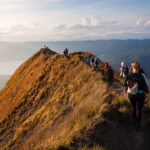
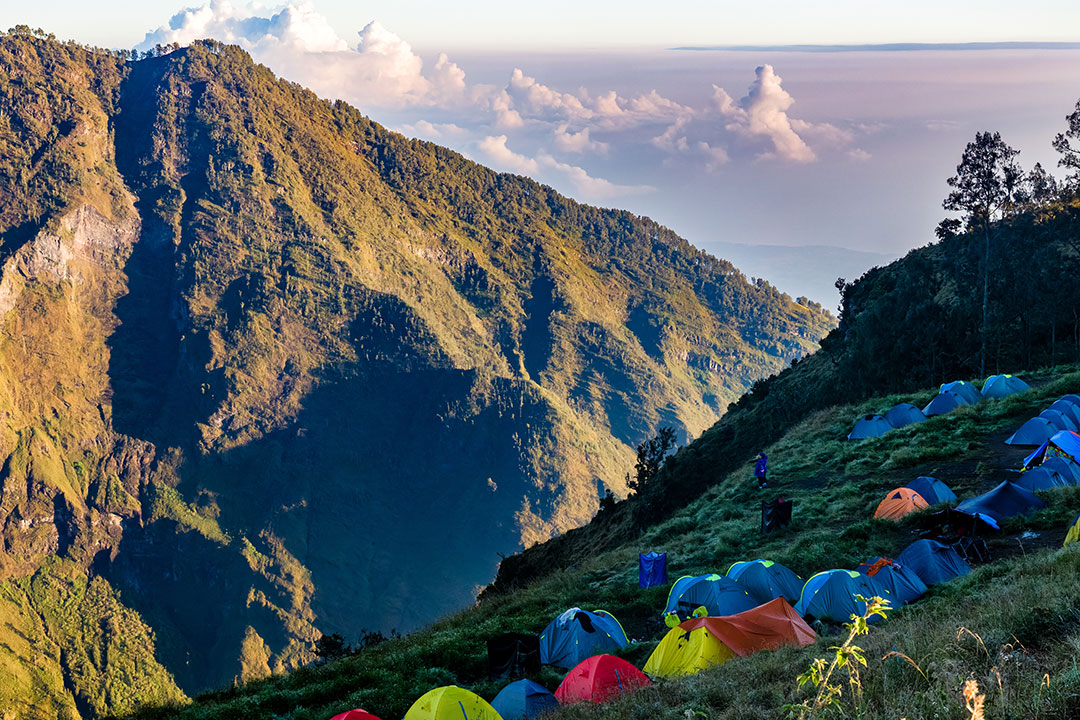
Indonesia forms part of the Pacific Ring of Fire, a vast volcanic belt that stretches across the Pacific Ocean. As a result, many of Southeast Asia’s most iconic treks are volcano climbs. Routes such as Mount Rinjani in Lombok, Mount Semeru in East Java and Mount Batur in Bali attract thousands of hikers each year. These treks often involve steep ascents on loose volcanic ash and early morning summit pushes for sunrise views above the clouds.
Cultural landscapes and mountain communities
Unlike many remote alpine regions, trekking routes in Southeast Asia frequently pass through inhabited landscapes. In northern Vietnam, for example, trails around Sapa wind through rice terraces cultivated by ethnic groups such as the Hmong and Dao. Multi-day treks often involve village homestays, allowing visitors to experience local traditions, food and daily life.
Jungle trekking and biodiversity
Another defining feature of the region is its rainforest ecosystems. Trekking in places like Borneo or Malaysia’s Taman Negara National Park takes hikers into some of the oldest tropical rainforests on the planet. Here the challenge is not altitude but the jungle itself: muddy trails, river crossings and wildlife encounters ranging from hornbills and macaques to rare species such as the orangutan.
Together, these elements create a trekking environment unlike almost anywhere else in the world. In Southeast Asia, the journey is rarely just about reaching a summit; it is equally about moving through landscapes shaped by tropical climate, volcanic geology and long-established human cultures.
Best Treks in Southeast Asia (Quick Overview)
Southeast Asia offers a surprisingly wide range of trekking experiences, from high-altitude volcano climbs to multi-day hikes through remote mountain villages and rainforest environments. While the region is often associated with beaches and island travel, several trekking routes have gained international recognition among hikers and adventure travellers.
The following examples highlight some of the most notable trekking experiences across Southeast Asia. Each represents a different environment and style of hiking.
| Trek | Country | Difficulty | Highlights |
| Mount Rinjani Summit Trek | Indonesia | Challenging | Volcanic crater lake, sunrise summit push |
| Mount Kinabalu | Malaysia | Moderate–Challenging | Highest peak in Borneo (4,095 m) |
| Sapa Valley Trek | Vietnam | Moderate | Rice terraces and minority villages |
| Mount Semeru | Indonesia | Challenging | Active volcano and dramatic summit views |
| Taman Negara Jungle Trek | Malaysia | Moderate | Ancient rainforest and wildlife |
| Ha Giang Highlands Trekking | Vietnam | Moderate | Remote limestone mountains and ethnic cultures |
Several of the region’s most famous treks involve volcano summits, particularly in Indonesia. Mount Rinjani on Lombok is widely regarded as one of the most spectacular volcano climbs in Southeast Asia, combining a high summit, a turquoise crater lake and multi-day trekking routes. Nearby Mount Semeru in Java offers a more demanding ascent to the highest mountain on the island.
Elsewhere, trekking often focuses on cultural landscapes rather than summits. In northern Vietnam, the valleys around Sapa and the Hoàng Liên Son range are known for terraced rice fields and traditional villages belonging to ethnic groups such as the Hmong and Dao. Trekkers typically move between villages, often staying in homestays along the way.
In Malaysia and Borneo, the experience shifts toward rainforest trekking. Trails in national parks like Taman Negara lead through dense jungle ecosystems, where wildlife, rivers and thick vegetation create a very different hiking environment from open mountain terrain.
Main Trekking Regions in Southeast Asia
Although Southeast Asia spans a vast geographical area, most trekking opportunities concentrate in a few key regions. Each offers distinct landscapes, climates and trekking styles.
1. Indonesia: The Region’s Volcano Trekking Capital
Indonesia is arguably the most dramatic trekking destination in Southeast Asia. Stretching across thousands of islands along the Pacific Ring of Fire, the country contains more active volcanoes than any other nation on Earth.
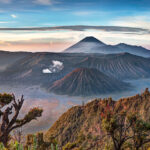
Many of the region’s most famous climbs are located here. Mount Rinjani (3,726 m) on Lombok is one of the most sought-after treks, typically completed over two or three days and famous for its crater lake, Segara Anak. On Java, Mount Semeru (3,676 m) offers a challenging ascent to the island’s highest peak, while volcanoes such as Mount Bromo and Mount Ijen attract trekkers seeking dramatic sunrise landscapes and volcanic craters.
Indonesia’s volcano treks often involve steep ascents, loose volcanic sand and early morning summit pushes, but they reward hikers with sweeping views above the clouds.
2. Northern Vietnam: Highland Trekking and Cultural Landscapes
Vietnam’s northern mountains offer some of the most culturally rich trekking routes in Southeast Asia. The region around Sapa, located near the Chinese border, is famous for its terraced rice fields and traditional villages belonging to ethnic minority communities.
Treks in this area typically follow narrow paths between villages, crossing rivers and agricultural landscapes. Multi-day routes often include homestay accommodation, allowing travellers to experience local cuisine and daily life in mountain communities.
Further east, the remote province of Ha Giang offers rugged limestone mountains and quieter trekking routes, while Fansipan (3,143 m), the highest peak in Indochina, rises above the Hoàng Liên Son range.
3. Malaysia and Borneo: Rainforest Mountains
Malaysia offers a different trekking environment dominated by tropical rainforest. The most famous objective is Mount Kinabalu (4,095 m) in Sabah, Malaysian Borneo. As the highest mountain in Southeast Asia, Kinabalu attracts climbers from around the world.
The climb typically takes two days and involves a steep ascent through several ecological zones, from rainforest to alpine granite slabs near the summit.
Elsewhere in Borneo, trekking often takes place in dense jungle landscapes, where routes pass through national parks and protected rainforest areas. Wildlife encounters, river crossings and muddy trails are common features of these expeditions.
Northern Thailand and Laos: Accessible Jungle Treks
While not as high or dramatic as some neighbouring regions, the mountains of northern Thailand and Laos offer accessible trekking routes through forested hills and rural villages.
Around Chiang Mai, guided treks often visit hill-tribe communities and combine hiking with cultural experiences. In Laos, trekking opportunities exist in mountainous areas such as Luang Namtha and the northern highlands, where protected areas preserve traditional lifestyles and dense forest environments.
Although elevations here are lower, the tropical climate and remote landscapes still provide a rewarding trekking experience for travellers seeking quieter routes.
Best Time for Trekking in Southeast Asia
Choosing the right season is one of the most important factors when planning a trek in Southeast Asia. Much of the region experiences tropical monsoon climates, meaning rainfall patterns can dramatically affect trail conditions, visibility and overall safety.
In general, trekking is most reliable during the dry seasons, when rainfall decreases and mountain trails become easier to navigate. However, the exact timing varies between mainland Southeast Asia and the Indonesian archipelago.
Table: General Trekking Seasons Across Southeast Asia
| Region | Best Months | Typical Conditions |
| Indonesia | April – October | Dry season, best for volcano trekking |
| Northern Vietnam | October – April | Cooler temperatures and clearer skies |
| Malaysia / Borneo | March – October | Relatively drier rainforest trekking |
| Northern Thailand | November – February | Cool dry season, comfortable temperatures |
In Indonesia, the dry season typically runs from April to October, when rainfall decreases and volcano routes such as Mount Rinjani or Mount Semeru become more accessible. During the wet season, heavy rains can make trails muddy and slippery, and clouds often obscure summit views.
Northern Vietnam has a slightly different climate pattern. The most comfortable trekking months are generally October through April, when temperatures are cooler and rice terraces in regions like Sapa remain visible beneath clearer skies. Summer months can bring intense humidity and frequent rainstorms.
In Malaysia and Borneo, rainfall occurs throughout the year but tends to be lower between March and October, which makes conditions more favorable for jungle trekking and climbs such as Mount Kinabalu.
Note: Despite these seasonal guidelines, weather in tropical mountains can change quickly. Sudden storms, dense fog and high humidity are common, particularly in rainforest environments. Trekkers should therefore remain flexible and allow extra time for changing conditions when planning routes.
Difficulty and Physical Demands
Trekking in Southeast Asia is often underestimated by travellers accustomed to hiking in temperate or alpine regions. While many peaks here are lower than those found in the Himalayas or the Andes, the combination of steep terrain, heat and humidity can make hikes surprisingly demanding.
Several environmental factors influence trekking difficulty across the region:
- Heat and humidity: Temperatures in many trekking areas regularly exceed 25–30°C, and humidity slows the body’s ability to cool down during long ascents.
- Steep volcanic terrain: Volcano routes such as Mount Rinjani or Mount Semeru involve loose volcanic ash and sustained elevation gain.
- Rapid altitude changes: Some mountains, particularly Mount Kinabalu, rise quickly from rainforest elevations to over 4,000 meters, increasing physical strain.
- Muddy jungle trails: Rainforest environments frequently produce slippery paths, thick vegetation and occasional river crossings.
- Remote landscapes: Many trekking routes lie in national parks or mountain regions with limited infrastructure and long access times.
Despite these challenges, most treks in Southeast Asia remain non-technical, meaning they do not require climbing equipment or advanced mountaineering skills. With reasonable fitness, proper pacing and awareness of weather conditions, many of the region’s most famous routes are achievable for adventurous travellers.
What makes trekking here demanding is not technical climbing but the environment itself—heat, humidity, steep slopes and tropical weather patterns that require endurance and careful planning.
Independent Trekking vs Local Guides
Whether you can trek independently in Southeast Asia depends largely on the location and local regulations. In some areas, well-established trails and national park infrastructure make independent trekking possible. In others, particularly on major mountains or within protected areas, local guides are mandatory.
One of the clearest examples is Mount Kinabalu in Malaysian Borneo, where climbers must obtain permits and are required to be accompanied by a licensed guide. This system helps regulate visitor numbers and improves safety on the mountain. Similarly, many treks on Mount Rinjani in Indonesia are organized through local trekking companies that provide guides, porters and logistical support.
In other parts of the region, hiring a guide is not always required but can greatly enhance the experience. In northern Vietnam, for example, village guides in the Sapa region often lead treks between remote communities, helping visitors navigate trails while providing insight into local culture and traditions. Homestays in mountain villages are also commonly arranged through these guides.
Independent trekking is more feasible on shorter national park trails or well-marked routes, particularly in areas with established tourism infrastructure. However, conditions in Southeast Asia can change quickly due to weather, and trails in rainforest environments are not always clearly marked.
For many travellers, hiring a local guide provides not only additional safety but also direct support for local communities, as trekking tourism often forms an important part of the regional economy.
Safety Considerations for Trekking in Southeast Asia
While trekking in Southeast Asia is generally safe, the tropical environment presents several factors that hikers should take into account when planning routes and preparing for multi-day treks.
- Heat exhaustion and dehydration: High humidity and temperatures can quickly drain energy levels, especially during long climbs. Carrying sufficient water and maintaining a steady pace are essential.
- Sudden weather changes: Tropical storms can develop quickly, particularly during the monsoon season. Heavy rain can make trails slippery and reduce visibility.
- Altitude exposure on higher peaks: Mountains such as Mount Kinabalu and Mount Rinjani rise above 3,500 meters, where altitude can affect some trekkers.
- Remote terrain: Some trekking routes pass through isolated areas where assistance may not be immediately available.
- Wildlife and insects: In rainforest regions, insects such as mosquitoes and leeches are common, and basic precautions are recommended.
Is Southeast Asia Right for Your Trekking Style?
Southeast Asia offers extraordinary trekking opportunities, but the experience differs significantly from more traditional mountain destinations. Understanding the region’s climate, terrain and trekking culture can help travellers decide whether it suits their expectations.
Southeast Asia is particularly rewarding for trekkers who enjoy:
- Cultural trekking experiences, including village homestays and encounters with local communities
- Short but intense mountain climbs, such as volcano summit treks completed in two or three days
- Diverse landscapes, from rainforest trails to highland rice terraces
- Adventure travel environments, where conditions are less predictable than in developed alpine regions
However, the region may feel more challenging for travellers who prefer:
- Cool alpine climates, similar to the Alps or Patagonia
- Highly developed trail infrastructure, including extensive hut systems and marked routes
- Long high-altitude expeditions, which are more typical in the Himalayas or Andes
For trekkers willing to adapt to tropical environments and embrace a different rhythm of mountain travel, Southeast Asia offers a rewarding mix of landscapes, cultures and adventure rarely found elsewhere.
Final Thoughts
Trekking in Southeast Asia reveals a side of the region that many travellers never see. Beyond its famous beaches and islands lie landscapes shaped by volcanic forces, tropical rainforests and centuries of mountain culture.
From the volcanic ridges of Indonesia to the terraced valleys of northern Vietnam and the rainforest mountains of Borneo, the region offers remarkable variety within a relatively compact part of the world. Each trekking destination presents its own combination of terrain, climate and cultural experiences.
While the environment can be demanding—particularly due to heat, humidity and seasonal weather patterns—those who prepare carefully are rewarded with journeys through some of the most distinctive landscapes in Asia.
For adventurous travellers seeking something beyond the usual travel routes, trekking in Southeast Asia provides an opportunity to explore mountains, forests and communities that remain largely untouched by mainstream tourism.