Backcountry Skiing in South America
By Srečo Rehberger
Unbelievable and unforgettable! A majestic snow mushroom at the top of the volcano, the view into its crater, and powerful gusts of wind demanding absolute focus. Even if nothing else, that moment alone—that feeling—was worth the 13,000-kilometer journey to the far south of South America.

The volcanoes were stunning and truly unforgettable. But were they really as great as I imagined? Or was it just my own longing, a bit of mountain romanticism? It was beautiful, yes—but much remained unfulfilled. Conditions weren’t on my side. Instead of soft spring snow and warm sunshine, I found winter on the summits—icy slopes and winds reaching 50 km/h. Hardly a tourist outing, more a serious mountaineering challenge. But that’s the way it goes in the mountains: in the end, it usually turns out well. This time too.

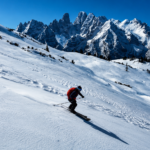
At the top of Lonquimay, standing on the rim of the crater. The wind whips snowflakes into the air, sculpting unique clouds.
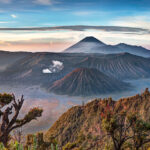
Chile’s ski volcanoes lie, simply put, between Aconcagua and Patagonia. There are four main ones—Lonquimay, Llaima, Villarica, and Lanin. For peak collectors, these are musts. But 100% success depends entirely on the weather. Alongside these giants are many smaller, so-called secondary volcanoes. Those who truly want to enjoy themselves will find bliss there. Sometimes, new ones even appear—like in 1988 on Christmas Eve, when Lonquimay erupted through a side crater and, overnight, a new mountain was born (Video Cautin 00:40).


MALALCAHUELLO
A small village with a long name, tucked beneath the modest Corralco ski resort. Small in size, big in quality. Six somewhat dated lifts, yet world-class slopes—steep and perfectly groomed. It’s no wonder it has become one of the main training bases for professional alpine ski teams before the season begins. People ski here when the season has already ended in the much more famous Portillo. Initially, I thought of starting my journey here, tempted by the legendary Rocca Jack slope and freeride couloir Cuper C. But to avoid adding even more distance to an already long trip, I decided to focus only on volcanoes—and ended up completing four beautiful tours around Malalcahuello.
Lonquimay: One of Chile’s most popular volcanoes. Wild gusts of wind on the way up, then a blissful descent under perfect conditions.
Cautin: A group of smaller peaks, one of which literally grew out of nowhere just twenty years ago. Three ascents, three descents—pure skiing pleasure with a condor soaring high above.
Arenales: A snow-day alternative in the territory of the Mapuche, Chile’s indigenous people. Deep within forests of ancient araucarias—Andean pines more than a thousand years old, their branches shaped like monkey tails. Warm hospitality with traditional food and drinks…
Llayma: The highest summit in the area. Breathtaking scenes on the climb—clouds and snowflakes dancing together. A massive snow mushroom crowns the peak, with winds so strong they demand full concentration.
PUCON
It’s probably true that this is Chile’s wealthiest town. The reason? Outdoor tourism, of course! Active travel has transformed many poor rural villages into thriving adventure hubs—just like Mestia in Georgia or, in Europe, Chamonix and Zermatt. The streets are lined with outdoor shops and travel agencies, excellent accommodations, and great restaurants. Rafting, mountain biking, skiing, hiking… Apparently, this is how a Chilean who values the good life spends their holidays. And the Gringos? They’re everywhere, naturally. Easy to spot by their “stylish” combo—down jacket and shorts—and their loud, confident chatter. On that point, locals and I agree completely. How can they all be so smart and sure of themselves, I wonder, sipping my coffee quietly? Next to them, I feel invisible.
The symbol of Pucon is Villarica—both the 2847-meter volcano and the large lake with its sandy and pebble beaches. I didn’t manage to experience either. Swimming season is summer, and when it was finally time for the volcano, it was frozen solid and wrapped in fog. My climb ended about halfway up.
MEHUIN
On my last day, I drove to the Pacific coast, to a small fishing town called Mehuin. And I’m glad I did! The moment the view opened onto the vast, rolling waves of the ocean was absolutely mesmerizing.
It seems I arrived at the perfect moment—everything was quiet and empty, not a single tourist around. I looked at the simple houses perched on the slopes above the sea and the scattered fishing boats in the harbor. The ocean hides great riches, but how can one reach them through such powerful waves with such humble equipment? On the beach, a few locals ran back and forth with the tide, scooping water into small pots and straining it into larger containers. It must be something edible…
And so, my short South American adventure comes to an end. As I drive toward the airport, I watch the white cones of volcanoes rising from the Chilean plains. From a distance, they seem friendly—much more than up close. This time, at least. But soon, spring will come, and the trees will bloom white once again…
My return flight begins in Temuco, the capital of the Araucanía region, the land of ancient araucarias—the “monkey trees.” You can’t miss the crowds of young people here—high-schoolers and students filling the streets. My impression, though I can’t explain why, is that they’re all motivated and determined—ready to work, to succeed. Their starting point may be modest, but still… Chile, for all its beauty, is not Europe.