If you want trekking in Indonesia that still feels raw, varied and undiscovered, Flores is where you go. This is not a single hike but a full island journey through volcanoes, villages and landscapes that change every few hours.
Flores is one of Indonesia’s most underrated trekking destinations. Stretching east of Lombok and west of Timor, the island is defined by rugged mountains, active volcanoes and a string of highland regions that feel far removed from the country’s more developed travel hubs.
Unlike destinations built around a single famous climb, trekking in Flores is best experienced as an overland journey. Travellers move gradually across the island, combining short but rewarding hikes with long scenic drives between regions such as Labuan Bajo, Ruteng, Bajawa and Moni. Each stop introduces a different landscape, from forested mountain trails and traditional villages to volcanic ridgelines and crater lakes.
This structure makes Flores unique. You are not simply hiking to reach a summit, but travelling through a diverse sequence of environments that reveal a quieter, more authentic side of Indonesia.
For those willing to trade convenience for depth, Flores offers one of the most varied and rewarding trekking experiences in Southeast Asia.
Flores Trekking at a Glance
Trekking in Flores is less about one major expedition and more about combining multiple short hikes across different regions of the island. The experience is shaped as much by travel logistics as by the trails themselves.
Table: Flores Trekking Quick Facts
| Feature | Details |
|---|---|
| Region | Flores, East Nusa Tenggara, Indonesia |
| Trekking style | Volcano hikes, village treks, overland journeys |
| Best season | April–October (dry season) |
| Signature hikes | Kelimutu, Wae Rebo, Mount Inerie, Mount Egon |
| Typical duration | Half day to 2 days per trek |
| Main challenge | Distances between regions, not technical terrain |
What Makes Trekking in Flores Different
Trekking in Flores stands apart from most destinations in Indonesia. Instead of focusing on a single iconic climb, the experience is built around movement — travelling across the island and combining multiple short treks into one continuous journey.
The first major difference is structure. In places like Lombok or Java, hikers often base themselves in one area and focus on a single mountain. In Flores, trekking is spread across regions. You might hike to a remote village one day, climb a volcano the next, and finish with a sunrise walk to crater lakes further east. The experience feels more like a sequence than a standalone trek.
Another defining element is the balance between nature and culture. Many trails lead through inhabited landscapes rather than remote wilderness. Routes such as Wae Rebo are as much about reaching traditional villages as they are about the hike itself, while highland regions around Bajawa and Ruteng combine scenic terrain with local life.
Logistics also play a central role. Distances between trekking areas are significant, and travel often involves long drives through mountainous terrain. This makes planning essential, but it also adds to the experience, as the journey between hikes becomes part of the adventure.
For travellers willing to embrace this slower, overland style, Flores offers something rare: a trekking destination where the journey matters as much as the individual hikes.
Best Trekking Areas in Flores
Flores is not a place where you base yourself in one town and explore nearby trails. The island reveals itself in sections, each with its own character, landscapes and trekking opportunities. Understanding these regions is key to planning a rewarding journey.
West Flores: Gateway to Wae Rebo
Most journeys begin in Labuan Bajo, but the real trekking starts inland. West Flores is defined by forested mountains and remote access roads that lead into one of the island’s most distinctive experiences: the trek to Wae Rebo.
This region is less about altitude and more about atmosphere. Trails wind through dense vegetation and climb steadily toward traditional villages hidden in the highlands. The reward is not a summit, but arrival — stepping into a place that feels untouched by time. West Flores sets the tone for the journey: slower, quieter and rooted in local culture.
Central Flores: The Highlands Around Ruteng and Bajawa
If Flores has a trekking heartland, it is here. The central highlands offer the most balanced combination of landscape, accessibility and hiking variety.
Around Ruteng, the terrain softens into rolling hills and forested ridges, while Bajawa introduces a more dramatic skyline dominated by Mount Inerie. This is where trekking becomes more physical. Trails are steeper, views are wider and the volcanic character of the island becomes unmistakable. At the same time, these highlands remain deeply connected to local life. Villages, traditional houses and cultivated slopes are never far away, giving hikes a strong sense of place.
East Flores: Kelimutu and the Volcanic East
Further east, the landscape shifts again. The town of Moni serves as the base for Kelimutu, one of the most recognisable natural landmarks in Indonesia.
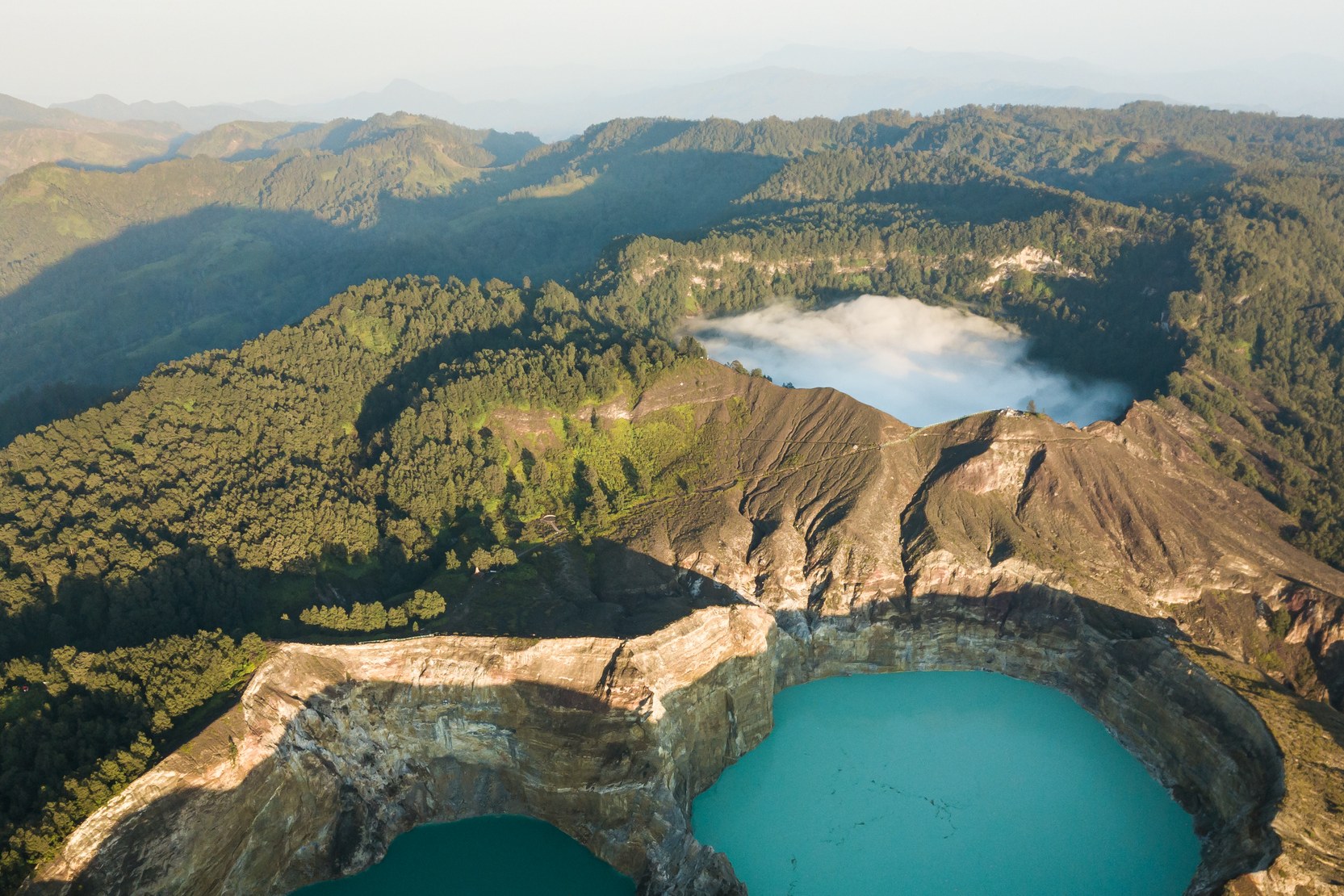
Trekking here is more accessible but no less memorable. The sunrise walk to Kelimutu’s crater lakes is short, yet the setting — three vividly coloured lakes set within a volcanic summit — makes it one of the most visually striking experiences on the island.
Beyond Kelimutu, the east becomes quieter and more rugged. Peaks like Mount Egon offer a more demanding climb for those seeking a less-travelled route. East Flores feels more remote, more exposed and more elemental — a fitting final chapter in a journey across the island.
Best Hikes in Flores (Quick Comparison)
As we have mentioned, Flores does not have one defining trek. Instead, it offers a set of distinct hikes, each representing a different side of the island — from cultural journeys to volcanic climbs and sunrise viewpoints.
Table: Best Hikes in Flores
| Hike | Area | Duration | Difficulty | Why Do It |
|---|---|---|---|---|
| Wae Rebo Trek | West Flores | Half day / overnight | Moderate | Remote mountain village experience |
| Kelimutu Sunrise Hike | Moni (East) | Half day | Easy | Three coloured crater lakes at sunrise |
| Mount Inerie | Bajawa (Central) | Half day | Hard | Most iconic volcano shape on Flores |
| Mount Egon | East Flores | Half day | Moderate–Hard | Raw, less crowded volcanic climb |
Detailed Flores Trekking Routes
The strength of trekking in Flores lies in its variety. Each route offers a different perspective on the island, from cultural immersion to volcanic landscapes. Rather than repeating similar experiences, these hikes complement each other and are best combined into a broader journey.
Wae Rebo Trek
The trek to Wae Rebo is one of the most distinctive experiences on Flores. Starting near the village of Denge, the trail climbs steadily through dense forest, gaining elevation over several hours before reaching a highland basin where the village appears almost unexpectedly.
The hike itself is moderate but consistent, with a gradual ascent that becomes more demanding toward the final section. What sets this route apart is the destination. Wae Rebo is a traditional village known for its circular houses and remote setting, surrounded by mountains and often covered in mist.
Most travellers choose to stay overnight, which allows time to experience the village atmosphere and avoid rushing the return journey. This transforms the trek from a simple hike into a cultural experience.
Kelimutu Sunrise Hike
Kelimutu offers one of the most accessible yet visually striking trekking experiences in Indonesia. Based in the village of Moni, hikers typically depart early in the morning to reach the summit in time for sunrise.
The walk itself is relatively short and well-defined, especially compared to other routes on Flores. The final section includes a short climb and steps leading to the viewpoints overlooking the three crater lakes.
What makes Kelimutu exceptional is not the physical challenge but the landscape. The lakes are known for their changing colours, ranging from deep blue to green and even reddish tones depending on mineral composition and volcanic activity.
Mount Inerie
Mount Inerie rises sharply above the Bajawa region and is widely considered the most visually striking volcano on Flores. Its near-perfect cone shape dominates the skyline, making it a natural target for hikers seeking a more serious climb.
The ascent is steep from the beginning and remains physically demanding throughout. Trails consist of loose volcanic terrain, with sections that require careful footing and steady pacing. Unlike Kelimutu, this is a true hike where fitness plays an important role.
Reaching the summit rewards hikers with expansive views across central Flores, especially at sunrise. The descent can be equally challenging due to the loose surface, requiring attention and control. For many, Mount Inerie represents the most complete trekking experience on the island.
Mount Egon
Mount Egon, located in the eastern part of Flores, offers a more rugged and less frequented alternative to Inerie. The trail begins at lower elevation and climbs steadily through vegetation before opening up into more exposed volcanic terrain.
The ascent is moderately demanding, with sections that can feel steep but are generally manageable for hikers with basic fitness. As you approach the summit, the landscape becomes more dramatic, with visible signs of volcanic activity and wide views over the surrounding area.
Unlike the more polished experience of Kelimutu, Egon feels raw and less structured. It attracts fewer visitors, which adds to the sense of isolation and exploration.
For trekkers looking to move beyond the island’s most popular highlights, Mount Egon offers a quieter but equally rewarding challenge.
How to Plan a Flores Trekking Trip
Planning a trekking trip in Flores is less about choosing a single base and more about understanding how the island fits together. Distances are long, roads are slow, and the best experiences are spread across different regions.
Most travellers follow an overland route from west to east, starting in Labuan Bajo and moving through Ruteng, Bajawa and Moni before finishing near Ende or Maumere. This allows you to combine multiple treks without unnecessary backtracking.
The key is pacing. Even though individual hikes are relatively short, travel between them can take several hours. It is best to think in terms of one main activity per day, whether that is a trek, a transfer or a rest stop.
A typical structure might look like this:
West Flores: Wae Rebo trek
Central Flores: Mount Inerie and highland villages
East Flores: Kelimutu and optional Mount Egon
Transport is usually arranged with a private driver, which gives the flexibility needed to stop, adjust plans and access trailheads. Public transport exists but is rarely practical for trekking-focused itineraries. Flores rewards travellers who plan with intention. With the right structure, it becomes a seamless journey rather than a series of disconnected hikes.
Best Time for Trekking in Flores
Timing matters in Flores, not because of extreme conditions, but because weather directly affects visibility, trail conditions and travel between regions.
Dry Season (April–October)
This is the best time for trekking across the island. Conditions are generally stable, skies are clearer and trails are easier to navigate. Volcano climbs such as Mount Inerie and Mount Egon are more predictable, and sunrise views at Kelimutu are far more reliable.
Road travel is also significantly smoother during these months, which is important given how much time you spend moving between regions.
Wet Season (November–March)
During the wet season, Flores becomes greener and more atmospheric, but trekking conditions are less consistent. Rain can make trails slippery, reduce visibility and occasionally disrupt travel plans. That said, short hikes such as Kelimutu are still possible, especially if weather windows are favourable.
Best Months to Go
For the best overall experience, aim for May to September. These months offer the most reliable combination of dry conditions, good visibility and manageable travel logistics across the island. If your goal is to combine multiple treks into one journey, this window gives you the highest chance of everything aligning smoothly.
Difficulty, Logistics & Local Guides
Trekking in Flores is rarely technical, but it should not be underestimated. The challenge lies less in the trails themselves and more in how the journey is structured across the island.
Most hikes are short to moderate in duration, but conditions can vary. Volcano climbs like Mount Inerie involve steep, exposed terrain, while routes such as Wae Rebo are longer but more gradual. Heat at lower elevations and early morning starts can also add to the physical demand.
What makes Flores different is logistics. Distances between trekking areas are significant, and travel often takes place on winding mountain roads. This means that energy management is just as important as fitness — you are not just hiking, but moving continuously between regions.
For most travellers, the simplest and most effective approach is to organise a driver or guided overland trip. This allows flexibility, easier access to trailheads and better time management.
In practice:
Most treks do not require technical skills
Fitness matters more than experience
Local guides are recommended for routes like Wae Rebo and some volcanoes
Transport is a key part of the overall trekking experience
Approached with the right expectations, Flores is accessible — but it rewards those who plan carefully and move at the right pace.
Is Flores Right for Your Trekking Style?
Flores is not a classic trekking destination, and that is exactly why it stands out. It suits travellers who are looking for variety, movement and a deeper sense of place rather than a single headline climb.
Flores is a strong fit if you:
enjoy combining trekking with cultural experiences
prefer varied landscapes over one long expedition
are comfortable with overland travel between regions
want a quieter, less developed alternative to Bali or Lombok
It may not be ideal if you:
are looking for one major, high-altitude summit
prefer well-marked, infrastructure-heavy trekking routes
have limited time and need a single-base destination
In the end, Flores rewards curiosity more than efficiency. If you approach it as a journey rather than a checklist, it becomes one of the most memorable trekking experiences in Indonesia. If you want a bigger single climb nearby, see our Mount Rinjani trekking guide.
Final Thoughts
Flores is not defined by a single trek, but by the journey that connects them. From forest trails leading to remote villages to steep volcanic climbs and sunrise viewpoints above crater lakes, the island offers a sequence of experiences that feel distinct yet naturally connected.
What sets Flores apart is its rhythm. You move slowly across the island, shifting between regions, landscapes and perspectives. Each hike adds a new layer, rather than repeating the last.
For travellers willing to embrace this style of exploration, Flores delivers something increasingly rare in Southeast Asia: a trekking destination that still feels open, varied and genuinely rewarding. It is not the easiest place to plan — but that is exactly why it stays with you.
Travel with Lifetrek
Looking for your next trekking adventure in Asia?
Explore our guided treks in the Himalayas and Central Asia.
Related guides: Indonesia trekking guide
Have a question or want to check dates? Contact us and we will help you choose the right trip. Always further.