

Patagonia’s two most famous views, the granite towers of Torres del Paine and Fitz Roy above El Chaltén, stand in different countries and a long day’s travel apart. Both can be reached on a day hike. The season runs from October to April, and for 2026/27 the rules have changed on each side of the border: new entry tickets in Chile, paid trails in Argentina, and an airport that closes on most weekdays at the height of summer.
Patagonia covers the southern end of South America, shared by Chile and Argentina, and it is far larger than most first-time visitors expect. The hiking is concentrated in four bases: Torres del Paine, El Chaltén, El Calafate and Ushuaia. Each one works differently. In some you walk out of town and onto the trail; in others every night has to be booked months ahead, with two separate companies.
This guide covers what each region offers, when to go, what the parks charge and how to move between them, for fit walkers planning a first trip. Prices and rules were checked against park and operator sources in November 2026. Both countries revise them often, so confirm anything time-critical before you book.
What changed for the 2026/27 season
If you are planning from a guidebook or a blog post written before mid-2026, parts of it are out of date. These are the five changes that affect a trekking trip this season. Each is covered in detail further down.
- Torres del Paine has a new entry ticket system. Since 1 May 2026 there are two tickets, one for a single day and one for longer stays, and both are bought online before you arrive.
- The trails at El Chaltén are no longer free. Hikers have paid a national park fee at the trailheads since late 2024, and the rate went up on 1 June 2026.
- El Chaltén’s trail campsites must be booked. Laguna Capri, Poincenot and De Agostini used to be free and open to anyone with a tent. All three now need a paid reservation.
- Puerto Natales airport runs a reduced schedule in peak season. Runway works from January to March 2027 limit flights to a few days a week, so most travellers bound for Torres del Paine will fly to Punta Arenas.
- The O Circuit reopened under closer supervision. The park authority set 1 November 2026 as the opening date for the full circuit, with the John Gardner Pass subject to its own safety and weather check.
One thing has not changed: the weather still decides more than any regulation. Build spare days into the plan wherever you can.
Patagonia’s trekking regions at a glance
Southern Patagonia has four bases that matter to hikers, and they are not interchangeable. The table shows how they differ; the sections below describe the walking in each.
| Region | Country | Gateway | Best for | Where you sleep | Days to allow |
|---|---|---|---|---|---|
| Torres del Paine | Chile | Puerto Natales | Day hikes, the W Trek, the O Circuit | Refugios, campsites or hotels | 3 to 9 |
| El Chaltén | Argentina | El Calafate, then by road | Day hikes to Fitz Roy and Cerro Torre | In town | 3 to 4 |
| El Calafate | Argentina | Own airport | Perito Moreno Glacier and ice trekking | In town | 1 to 2 |
| Ushuaia | Argentina | Own airport | Short hikes, coast and forest | In town | 2 to 4 |
Torres del Paine (Chile)
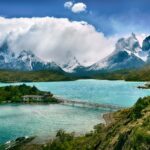
The Paine massif rises straight from the steppe, and the park is built around it. There are three ways to walk here.
Day hikes suit anyone with two or three days. The classic is Base Torres, the climb to the lake beneath the three towers. The park authority rates it medium to high and allows 8 hours for the return trip; expect around 20 km and a steep, rocky final hour over moraine. The second is the French Valley, reached by catamaran across Lake Pehoé to Paine Grande. From there it is 7.5 km to the old Italiano camp, then 5.4 km and about 600 m of climbing to Mirador Británico, an amphitheatre of granite walls. Most day walkers turn round at the lower Mirador Francés, which already looks onto the hanging glacier.
The W Trek links those two valleys with Grey Glacier in 4 to 5 days and about 76 km, sleeping in refugios or campsites along the way.
The O Circuit adds the remote northern side of the massif and the John Gardner Pass. It takes 8 to 9 days, covers roughly 110 km and may only be walked anticlockwise.
Watch the clock here more than anywhere else in Patagonia. Rangers close sections at fixed times. Day hikers must be on the Base Torres trail by 09:00 and off it by 15:00, and the path from Italiano to Mirador Británico closes at 15:00. Arrive late and you will be turned back, whatever the weather is doing.
El Chaltén and Fitz Roy (Argentina)
El Chaltén is the simplest place in Patagonia to hike. The trails start at the edge of the village, they are well marked, and you are back in a bed every night.
Laguna de los Tres is the walk everyone comes for: 20 to 24 km return, about 750 to 800 m of ascent and 8 to 9 hours. Nearly all the effort is saved for the end, where the path climbs some 400 m in a little over an hour to the lake at the foot of Fitz Roy. Save this one for the clearest forecast of your stay.
Laguna Torre is the gentler second day: about 18 km return with 400 m of ascent, ending at a glacial lake below the spire of Cerro Torre. If the wind is up or legs are tired, Laguna Capri gives a full view of Fitz Roy for a half-day’s walk.
For experienced trekkers there is the Huemul Circuit: four days and 65 to 70 km over two passes, with views across the Southern Patagonian Ice Field and two river crossings by Tyrolean traverse. Registration with the park is free but compulsory.
Stay at least three days. Fitz Roy spends a good part of most weeks in cloud, and a spare day is often what separates seeing it from not.
El Calafate and Perito Moreno Glacier (Argentina)
El Calafate is a base for one thing: Perito Moreno, a glacier front some 5 km wide that calves into Lago Argentino about 80 km west of town. It is the one major sight in Patagonia that asks nothing of your legs. A network of steel walkways faces the ice from the opposite shore, open to all ages and fitness levels, and an hour or two there is enough to watch blocks the size of houses fall into the lake.
To go further you walk on the glacier itself. A single licensed operator, Hielo y Aventura, runs both options, and the age limits are applied without exceptions:
- Minitrekking: about an hour on the ice in crampons, near the glacier’s edge. Open to ages 8 to 65.
- Big Ice: three to four hours deep into the glacier among crevasses and meltwater pools, in a full day of around 12 hours. Open to ages 18 to 50 only, and demanding.
Check your age before you book. Some guidebooks and blogs still list 65 as the upper limit for Big Ice. The limit is 50, and the operator checks ID on the day of the trek. Anyone outside the range is turned away, booking or not. Travellers aged 51 to 65 can still do the Minitrekking.
One or two nights is enough here. Most travellers pair El Calafate with El Chaltén, three hours north, which shares the same national park but has its own entrance.
Ushuaia and Tierra del Fuego (Argentina)
Ushuaia sits on the Beagle Channel at the foot of the last range of the Andes. The mountains are lower than further north and the trails are shorter, wetter and far less crowded. It works well at the start of a trip, as a way to find your legs before the bigger days.
- Tierra del Fuego National Park begins a few kilometres west of town. Its trails follow the shoreline through southern beech forest, with little climbing. This is also where the Pan-American Highway ends.
- Martial Glacier is the hike you can start from the city: a short, steep 6 to 7 km return to a viewpoint over the channel and Navarino Island.
- Laguna Esmeralda is the most popular walk in the area, about 9 to 10 km return and 4 hours, across peat bog to a milky green lake. The ground is wet in any season. Waterproof boots matter more here than anywhere else on the route.
- Vinciguerra Glacier and Laguna de los Témpanos is the hard option, a strenuous full day that is best done with a guide.
How to hike it: day hikes, the W, the O, guided or alone
Once you know where you want to go, the real decision is how to walk it. In El Chaltén and Ushuaia there is only one answer, since every trail is a day hike from town. Torres del Paine is where the choice has to be made, and it shapes the whole trip.
| Day hikes from a base | W Trek | O Circuit | |
|---|---|---|---|
| Time in the park | 2 to 3 days | 4 to 5 days | 8 to 9 days |
| What you carry | Day pack | 5 to 7 kg with refugio beds; 12 to 15 kg camping | 12 to 15 kg or more |
| Booking effort | Entry ticket and transport | Every night reserved, across two companies | Every night reserved, fixed direction |
| Cost | Lowest | High in refugios, moderate camping | Highest overall |
| What you see | The towers and the French Valley | Both, plus Grey Glacier | Everything, plus the remote north side |
| Who it suits | First visits, mixed groups, tight schedules | Fit walkers who want the full classic | Experienced trekkers with time |
Day hikes give you the two views most people come for, the towers and the French Valley, with a light pack and a proper bed. What you give up is Grey Glacier at close range and the sense of travelling through the park under your own power. What you avoid is the booking. For many first-time visitors that is a fair trade, and it is the model behind a guided 16-day Patagonia trip built around day hikes, which pairs both valleys with Fitz Roy and Perito Moreno.
The W Trek is the classic for good reason, but it takes planning. Every night must be reserved in advance, and the huts and campsites are split between two companies: Las Torres runs the eastern half, Vértice the western. A standard itinerary means two separate bookings that have to line up night by night, and the popular dates sell out months ahead. The park authority’s free campsites, once the budget option, are closed.
The O Circuit is a different order of commitment: longer, more exposed and walked in one direction only. It is the best trek in the park and the wrong choice for a first multi-day hike.
Guided or alone?
It depends on which part of Patagonia you mean. El Chaltén needs no guide. The trails are obvious, the village is at the trailhead and the only skill required is reading a forecast. In Torres del Paine a guide is optional in summer and compulsory in winter.
Where organised travel earns its price is in the joins. Crossing between Chile and Argentina, matching buses to park hours and securing W Trek beds takes real time to arrange, and a missed connection can cost a day you do not have. On the trail, a good guide makes the weather calls and paces the group against the closing times. Independent travellers who enjoy the planning will manage well. Those with two weeks and no wish to spend evenings on booking sites usually do better with help.
See both parks without carrying a tent
Lifetrek’s 16-day Patagonia programme covers Base Torres, the French Valley, Laguna de los Tres and Perito Moreno, with Ushuaia at the start. Simple hotels and mountain huts, local guides, departures in February and March.
When to go: Patagonia month by month
The trekking season runs from October to April. Outside it, days are short, snow closes the higher trails and most lodges and bus services shut down. Within it, the months differ more than the temperature charts suggest, because wind and daylight shape a hiking day here more than warmth does.
| Month | Daytime high | Daylight | Wind | Crowds | Good to know |
|---|---|---|---|---|---|
| October | 10 to 14 °C | 13½ h | Building | Low | Season opens; snow lingers on high ground; some services not yet running |
| November | 13 to 17 °C | 15½ h | Strong | Moderate | Wildflowers; the O Circuit opens |
| December | 15 to 20 °C | 16½ h | Strong | High | Longest days; prices climb from mid-month |
| January | 17 to 22 °C | 15½ h | Strongest | Highest | Warmest month; everything must be booked early |
| February | 16 to 21 °C | 14 h | Strong, easing | High, falling | Summer conditions with a little more room |
| March | 13 to 18 °C | 12½ h | Milder | Moderate | Autumn colour from mid-month; first snow possible on high trails |
| April | 10 to 13 °C | 10½ h | Variable | Low | Cold nights; lodges begin to close |
Temperatures are typical valley figures for El Chaltén and Torres del Paine. Nights fall to between 3 and 8 °C through the summer, and it is colder at the viewpoints.
The wind
Patagonia sits in the path of the westerlies that circle the Southern Ocean, with no land to slow them. They blow hardest from November to February, the same months that have the best temperatures. Gusts above 100 km/h are routine on exposed ground: the final climb to Base Torres, the ridge above Laguna de los Tres, the lakeshore sections of the W. Wind at that strength knocks walkers off balance, closes trails and cancels boat crossings. No month is calm, but March is noticeably gentler.
Whatever the month, pack a proper waterproof shell, warm gloves and trekking poles.
Which month to choose
- For the longest days and warmest weather: December and January. You pay for it in crowds, prices and wind.
- For the best balance: February and March. February keeps full summer conditions as the peak-season pressure eases. March brings calmer air, clear light and the lenga forests turning red and gold around Fitz Roy, at the cost of shorter days and a chance of early snow up high.
- For quiet trails and lower prices: November, if you accept unsettled weather and strong wind.
- To avoid: October and April for a first visit, unless your plans are flexible. Conditions are less predictable and services are reduced.
Winter
From May to September the region is a different proposition. In Torres del Paine a licensed guide is compulsory on the W Trek and the Base Torres trail through the winter months; in 2026 the rule ran from 27 April to 15 September, and the W itself was closed in June and July. Perito Moreno is the exception: the glacier can be visited all year.
Park fees and trip costs for 2026/27
Every national park on the classic route now charges for entry, and each one sells its tickets differently. The rates below are for foreign adults, as published by the park authorities and checked in November 2026. Euro figures are rounded at the exchange rates of the time.
| Park | One day | Longer stay | How to buy |
|---|---|---|---|
| Torres del Paine (Chile) | CLP 32,400 (about €30) | CLP 48,500 (about €45) for two or more days, valid up to 10 consecutive days | Online only, at least 24 hours before you arrive |
| Los Glaciares, El Chaltén trails (Argentina) | ARS 50,000 (about €30) | ARS 100,000 (about €60) for 3 days; ARS 175,500 (about €105) for 7 days | Card or QR code at the trailhead, or online. No cash |
| Los Glaciares, Perito Moreno (Argentina) | ARS 50,000 (about €30) | Same passes as above | At the park gate or online |
| Tierra del Fuego (Argentina) | ARS 40,000 (about €24) | ARS 80,000 (about €48) for 3 days; ARS 140,000 (about €83) for 7 days | At the gate or online |
Torres del Paine: buy before you travel
Chile’s park tickets are sold through the official Pases Parques website and cannot be bought at the entrance.
- Pick the right pass. The day pass covers a single visit. Anyone staying overnight or returning for a second day needs the longer one.
- Buy at least 24 hours ahead and have your passport number to hand.
- Download the QR code to your phone before leaving Puerto Natales. There is no signal at the gate.
- Children under 12 enter free. Ages 13 to 17 pay CLP 16,600 (about €15) for the day pass.
Argentina: plan your days to pay less
- Second day at half price. Return within 72 hours of your first entry and you pay 50%. Two days of hiking in El Chaltén then cost ARS 75,000 (about €45).
- Three days or more: the multi-day pass is better value.
- Two entrances, one park. El Chaltén and Perito Moreno both belong to Los Glaciares but are ticketed separately. Ask when you buy whether a multi-day pass is accepted at both.
- Expect increases. The current rates took effect on 1 June 2026.
El Chaltén’s trail campsites
Laguna Capri, Poincenot and De Agostini are booked in advance through the park’s Friends Association and paid per person, per night, on top of the entry fee. The rate reported for this season is ARS 30,000 (about €18).
If you are travelling on an organised trip, check what the price covers. Lifetrek’s Patagonia programme includes entry to all three parks.
What the rest costs
Park fees are the small part of the budget. These are the items that move it, at published 2026/27 rates per person. The hut operators in Torres del Paine price in US dollars.
| Item | Price |
|---|---|
| Refugio bed on the W Trek, eastern half (Las Torres) | From US$230 (about €210) a night, November to March; US$200 (about €180) in October and April |
| Refugio bed on the W Trek, western half (Vértice, Paine Grande) | US$66 (about €60) basic; US$114 (about €105) with bedding |
| Self-guided W Trek package from the hut operators, five days | From about US$1,640 (€1,485) in equipped tents; about US$2,070 (€1,875) in refugio beds |
| Catamaran across Lake Pehoé | CLP 28,000 (about €26) each way |
| Perito Moreno Minitrekking, without transfer | From ARS 420,000 (about €250), plus park entry |
| Perito Moreno Big Ice | From ARS 550,000 (about €330), plus park entry |
The takeaway: a refugio bed on the W Trek is the costliest night of most Patagonia trips. El Chaltén is far better value: you sleep in the village and pay only the park fee.
Getting there and getting around
From Europe you fly via Buenos Aires for the Argentine side or Santiago for Chile, then take a domestic flight south. Four airports serve the hiking areas:
- El Calafate (Argentina): for Perito Moreno and El Chaltén.
- Ushuaia (Argentina): for Tierra del Fuego.
- Punta Arenas (Chile): the dependable gateway for Torres del Paine, three hours by bus from Puerto Natales.
- Puerto Natales (Chile): closest to the park, but restricted this season. Runway works from January to March 2027 limit flights to a few days a week. Unless your dates happen to match, fly to Punta Arenas.
On the ground, everything moves by bus.
- El Calafate to El Chaltén: El Chaltén has no airport. Buses take about three hours on a paved road, several times a day in season. A one-way ticket cost ARS 70,000 (about €42) in October 2026.
- El Calafate to Puerto Natales: the link between the two countries, sold as five to six hours including the border at Cerro Castillo. In January, queues at the two checkpoints can stretch it past seven.
Never book a flight for the same day as a border bus. Leave a night in between.
One rule catches people out at the frontier: Chile bans fresh fruit, vegetables, meat and dairy from entering the country. Declare any food you carry and finish the trail snacks before you cross. Fines are issued on the spot.
Before you go: money, paperwork and what to book when
Money. In Argentina, pay by card. Foreign cards are now charged at close to the cash exchange rate, so the old advice to arrive with a stack of dollars no longer applies. Keep a small reserve of cash for buses and village shops. Chile accepts cards almost everywhere on the tourist route.
Entry. Most European passport holders may enter both countries without a visa for stays of up to 90 days. Check your own government’s travel advice before booking, as rules differ by nationality.
Insurance. Carry proof of travel health cover. Argentine migration law now requires foreign visitors to hold it, and public hospitals in the region charge non-residents for treatment. Make sure the policy covers hiking and evacuation.
What to book, and when
- 6 to 12 months ahead: international flights, and every night on the W Trek or O Circuit if you plan to walk them.
- 2 to 3 months ahead: domestic flights and, for December to February, ice trekking on Perito Moreno.
- A few days ahead: your Torres del Paine entry ticket and any trail campsite in El Chaltén.
- On the day: Argentine park tickets, and the forecast. In El Chaltén, choose your hike each morning by the wind and cloud.
Frequently asked questions
How many days do you need for Patagonia?
Allow 10 to 14 days to combine Torres del Paine, El Chaltén and Perito Moreno without rushing, and two or three more if you add Ushuaia. With a week, choose one side of the border and do it properly.
Can you visit Chilean and Argentine Patagonia in one trip?
Yes, and most people do. A daily bus links El Calafate and Puerto Natales in five to six hours, border included. Give the crossing a full day in your plan and keep your passport to hand.
Is Patagonia suitable for a first long-distance hiking trip?
The day hikes are, provided you walk regularly and can manage eight hours on your feet. The W Trek suits fit beginners who stay in refugios and carry a light pack. The O Circuit is for experienced trekkers only.
Can you drink the water on the trails?
In El Chaltén and Torres del Paine, walkers commonly fill their bottles from streams above the campsites, and many drink it untreated. A filter or purification tablets weigh little and remove the doubt.
Is there phone signal in the parks?
Hardly any. Expect none on the trails and a weak signal in El Chaltén village. Some refugios in Torres del Paine sell Wi-Fi by the hour. Download maps, tickets and bookings before you set out.
Trek Patagonia with Lifetrek
Patagonia rewards good planning more than almost anywhere else, and it punishes tight schedules. If you would rather walk than organise, we can take care of the rest.
16 days from Ushuaia to Fitz Roy and Iguazu
Tierra del Fuego, Torres del Paine, Perito Moreno Glacier and El Chaltén in one journey, on foot by day and in a bed by night. Entry to all three national parks and domestic flights are included. Departures in February and March.
[…] way. El Chaltén’s Huemul Circuit is a serious four-day route for experienced trekkers only. Our Patagonia trekking guide compares the options in […]