Jebel Toubkal (4,167 m) is the highest mountain in North Africa and one of the most accessible 4,000-metre peaks in the world. Most people climb it in two days from Imlil and back. A longer traverse through the Atlas, past Lake Ifni and over passes above 3,500 metres, turns a quick summit into a real mountain journey.
Toubkal rises in the High Atlas about 60 kilometres south of Marrakech. From the summit you look across the whole range, down to the plains around Marrakech and, on a clear day, towards the edge of the Sahara. The standard route is a non-technical walk in summer, but it starts at around 1,700 metres and gains nearly 2,500 metres in two days, which is more than many visitors expect.
This guide covers the main ways to climb Toubkal, the difference between the standard ascent and a multi-day traverse, difficulty and altitude, the best season, the guide rule and practical logistics.
Two Ways to Climb Toubkal
The standard ascent from Imlil
Almost everyone starts in Imlil, a mountain village around 1,700 metres, about an hour and a half by road from Marrakech. Day one is a walk of five to six hours up the Mizane valley to the Toubkal refuges at about 3,200 metres. On day two you start before dawn, climb roughly 950 metres to the summit and walk all the way back down to Imlil.
It is quick and well organised, but it is also the busiest route in the range, and it gives your body very little time to adjust to the altitude.
The traverse via Lake Ifni
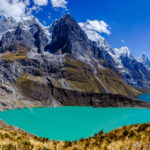
The alternative is to approach Toubkal from the east and south over several days. You cross high passes, camp or sleep in remote Berber villages, spend a night by Lake Ifni, the only lake in the area, and reach the refuge from the other side over the Ouanoums Pass. By summit day you have already spent several nights between 2,000 and 3,200 metres and crossed passes above 3,500 metres, so the final climb feels far easier.
This is the route we use on our Toubkal trek. It takes five days in the mountains instead of two, and it shows you a side of the Atlas that most Toubkal visitors never see.
The Lake Ifni Traverse Day by Day
| Day | Stage | Highlight | Night |
|---|---|---|---|
| 1 | Imlil – Tacheddirt – Azib Likemt | Tamatert Pass (2,279 m) and Likemt Pass (3,555 m) | Tents |
| 2 | Azib Likemt – Amsouzert | First view of Toubkal from the Ouraine Pass (about 3,200 m) | Village hut |
| 3 | Amsouzert – Lake Ifni | Berber villages and an afternoon by the lake | Tents or stone hut |
| 4 | Lake Ifni – Toubkal refuge | Ouanoums Pass (3,664 m) | Refuge (about 3,200 m) |
| 5 | Summit – Imlil | Jebel Toubkal (4,167 m) | Berber guesthouse in Imlil |
Walking times are typically 6 to 7 hours a day. The summit day is the longest, with the climb from the refuge and the full descent to Imlil.
How Difficult Is Toubkal?
In summer, the standard route to Toubkal is a non-technical mountain walk on rocky paths and scree. No climbing skills are needed. It is still a serious day out for three reasons:
- Altitude. At 4,167 metres the air holds noticeably less oxygen. Headaches and shortness of breath are common, especially on the quick two-day ascent.
- Scree. The upper slopes are loose stone. Going up is slow, and coming down is hard on the knees.
- A long summit day. Around 950 metres of ascent to the summit, followed by around 2,450 metres of descent to Imlil on the same day.
The traverse adds more walking days but makes the summit easier, because you arrive at the refuge well acclimatised. If you are comfortable hiking 6 to 7 hours a day several days in a row, it is a very realistic objective.
Best Time to Climb Toubkal
Toubkal can be climbed all year, but the experience changes completely with the season.
- Late spring to autumn (roughly May to October) is the trekking season. Paths are mostly free of snow and no special equipment is needed. July and August can be very hot in the valleys.
- Winter (roughly December to March) turns Toubkal into a winter mountaineering objective. Snow and ice cover the upper slopes, and crampons and an ice axe are required. Mules often cannot reach the higher sections.
- The shoulder months can bring lingering snow on the passes and on the north-facing slopes. We arrange crampon rental when conditions need it.
Do You Need a Guide for Toubkal?
Yes. Since 2019, trekkers in Toubkal National Park must be accompanied by a local mountain guide. The rule was introduced after the murder of two hikers near Imlil in December 2018. There is a checkpoint at Aroumd, just above Imlil, where passports and guide details are checked, and the refuges do not accept independent walkers.
In practice this works in your favour. A local guide knows the weather patterns and the safest lines on the scree, and on a multi-day trek the team also includes a muleteer who carries the tents, food and luggage, and a cook.
Logistics and Practical Tips
Getting there
Marrakech has direct flights from most European cities. From Marrakech to Imlil it is around an hour and a half by road, the last part on a winding mountain road. Most groups use a private transfer.
Where you sleep
On the standard ascent you sleep in one of the two refuges at the foot of the summit, at about 3,200 metres. On the traverse you also camp, sleep in a simple village hut and spend the last night with a Berber family in Imlil.
What to bring
Nights are cold at altitude even in summer, so bring a warm layer, a hat and gloves. Good boots with ankle support make the scree much easier. Trekking poles help on the long descent. Bring sun protection: the light is strong and there is little shade above the villages.
Combine it with Marrakech
Most trips start and end in Marrakech. Keep at least half a day for the medina, the souks and Jemaa el-Fnaa square after the trek. It is a striking contrast to a week in the mountains.
Common Mistakes on Toubkal
- Treating it as an easy hike. The route is not technical, but the altitude and the summit day are real effort.
- Going up too fast. Two days from 1,700 to 4,167 metres is a big jump. Give yourself time if you can.
- Underestimating winter. From December to March, Toubkal needs winter mountaineering equipment and experience.
- No cash. Villages, tips and small purchases in the mountains are paid in dirhams.
Is Toubkal Right for You?
Toubkal is an excellent first 4,000-metre summit and a great short trip from Europe. If you want the summit with as little time as possible, the standard two-day route will get you there. If you want to see the Atlas, sleep in Berber villages and reach the top properly acclimatised, take the long way via Lake Ifni.
And if Toubkal goes well, it is a natural step towards higher objectives such as Kilimanjaro.
Frequently Asked Questions
How high is Toubkal?
Jebel Toubkal is 4,167 metres high, the highest mountain in Morocco and in all of North Africa.
How many days do you need to climb Toubkal?
The standard ascent takes two days from Imlil. A traverse via Lake Ifni takes five days in the mountains and gives you much better acclimatisation. Our full trip is eight days from Marrakech to Marrakech.
Is a guide mandatory on Toubkal?
Yes. Since 2019, a local guide is required in Toubkal National Park, and there is a checkpoint at Aroumd above Imlil.
Can I climb Toubkal in winter?
Yes, but in winter it becomes a snow and ice climb that requires crampons, an ice axe and winter mountaineering experience.
Do I need previous experience?
For the summer route, you need good fitness and experience of long days in the mountains. No technical skills are required.
Travel with Lifetrek
Climb Toubkal with Lifetrek
Five days across the High Atlas via Lake Ifni, a summit day on North Africa’s highest peak and a night in Marrakech. Local guide, mules and all meals on the trek included. We pick you up at Marrakech airport.
Have a question or want to check dates? Contact us and we will help you choose the right trip. Always further.