If you want trekking that blends dramatic landscapes with real cultural depth, Vietnam delivers. This is a place where every trail leads not just through mountains, but through villages, rice terraces and everyday life.
Vietnam has quietly become one of the most compelling trekking destinations in Southeast Asia. While it lacks the towering peaks of the Himalayas or the volcanic drama of Indonesia, it offers something equally powerful: a landscape shaped by people as much as by nature.
The country’s trekking heart lies in the north, where mountain ranges stretch across regions such as Sapa, Ha Giang and the Hoang Lien range. Here, trails cut through layered rice terraces, forested valleys and remote villages inhabited by ethnic minority communities including the Hmong, Dao and Tay.
What makes trekking in Vietnam distinct is how closely it is tied to daily life. Paths often double as local routes between villages, and many treks include overnight stays in family-run homestays. The experience is less about isolation and more about connection — moving through landscapes that are actively lived in.
From short village walks to more demanding climbs like Fansipan, Vietnam offers a wide range of trekking options. In this guide, we explore the best regions, routes and practical details to help you plan a rewarding trekking journey across the country.
Vietnam Trekking at a Glance
Vietnam’s trekking landscape is diverse but relatively accessible. Most routes are found in the northern part of the country and combine moderate physical effort with strong cultural immersion rather than extreme altitude or technical difficulty.
Table: Vietnam Trekking Quick Facts
| Feature | Details |
|---|---|
| Best trekking region | Northern Vietnam (Sapa, Ha Giang, Hoang Lien) |
| Trekking style | Village treks, mountain hikes, homestay routes |
| Best season | March–May and September–November |
| Signature treks | Sapa villages, Fansipan, Ha Giang, Pu Luong |
| Typical duration | 1–5 days |
| Difficulty range | Easy to challenging |
Vietnam is particularly well suited to travellers who want to combine hiking with cultural exploration, rather than focusing solely on remote wilderness trekking.
What Makes Trekking in Vietnam Unique
Trekking in Vietnam is defined less by altitude and more by the relationship between landscape and culture. Unlike many mountain destinations where trails lead into remote wilderness, Vietnam’s hiking routes often pass through areas that are actively cultivated and inhabited.
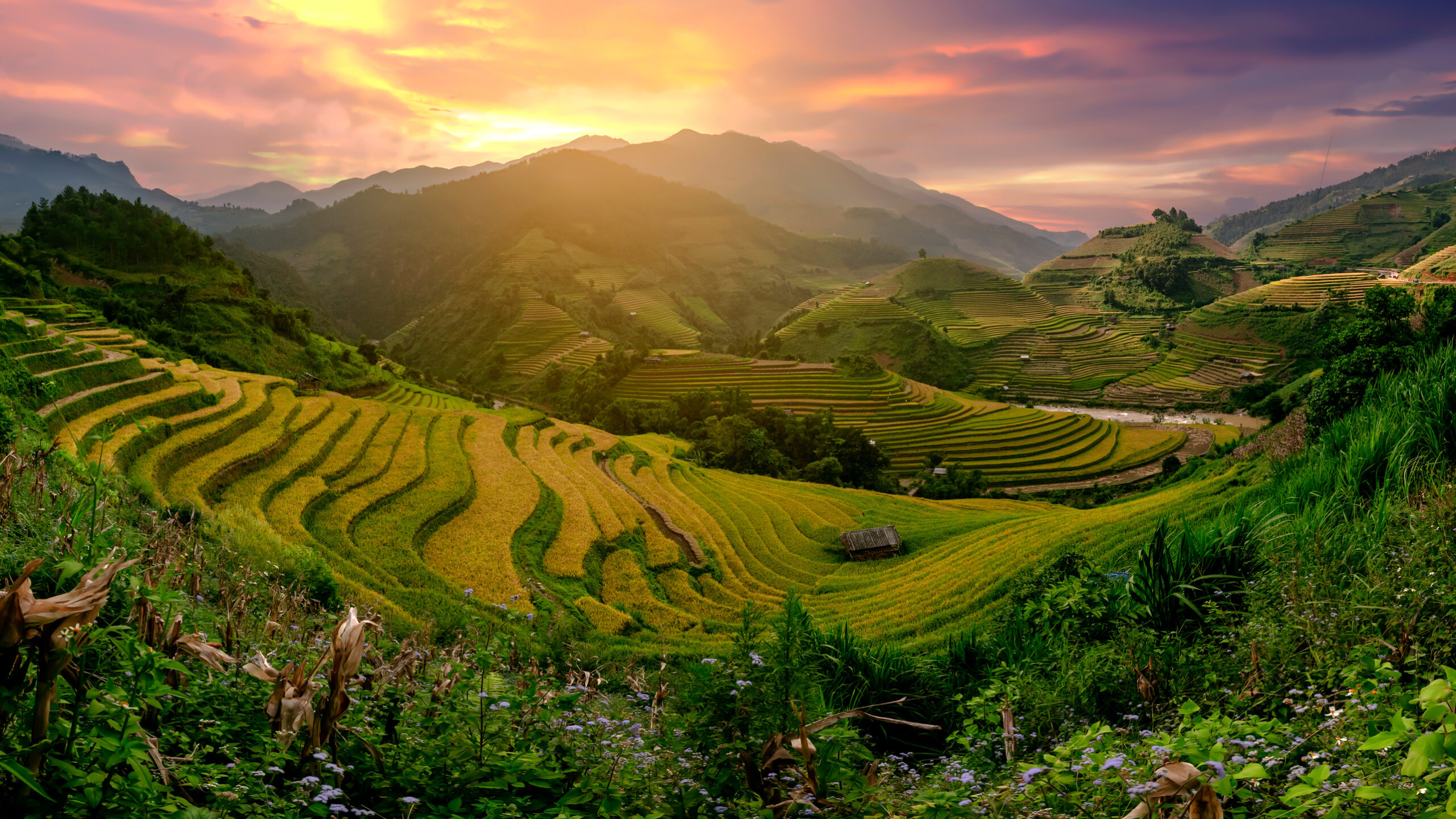
One of the most distinctive features is the rice terrace landscape. In regions such as Sapa and Mu Cang Chai, hillsides are shaped into layered terraces that change dramatically with the seasons. Depending on the time of year, they appear bright green, golden or flooded with reflections, creating some of the most visually striking trekking scenery in Southeast Asia.
Equally important is the cultural dimension. Many trekking routes connect villages inhabited by ethnic minority communities, including the Hmong, Dao and Tay. Trails are not just hiking paths but everyday routes used for farming, trade and travel. This means trekking often involves direct interaction with local life, whether passing through villages or staying overnight in homestays.
This homestay trekking culture is another defining element. Instead of camping or staying in mountain huts, trekkers typically spend nights in family-run homes. This adds a level of comfort, but more importantly, it creates a more personal and grounded experience.
As a result, trekking in Vietnam feels less like escaping civilisation and more like moving through it. The experience is shaped by people, agriculture and tradition as much as by mountains and terrain.
Best Trekking Regions in Vietnam
Vietnam’s trekking experiences are concentrated in the north, where mountain ranges, valleys and ethnic minority communities create the country’s most rewarding hiking landscapes. Each region offers a slightly different balance between scenery, accessibility and authenticity.
Sapa Region
Sapa is Vietnam’s most well-known trekking destination, and for good reason. Located near the Chinese border, it offers a dense network of trails that wind through rice terraces and connect villages such as Lao Chai and Ta Van.
Trekking here is relatively accessible, with routes ranging from short half-day walks to multi-day village-to-village itineraries. While tourism is more developed than in other regions, the landscapes remain striking and the variety of routes makes Sapa a natural starting point for trekking in Vietnam.
Best suited for: Sapa is best suited to first-time trekkers or those looking for a well-structured experience. With established trails, easy logistics and a wide range of accommodation options, it offers the most accessible introduction to trekking in Vietnam.
Ha Giang & Northern Highlands
Further north, Ha Giang offers a more remote and less commercialised experience. Known primarily for its dramatic motorbike loop, the region also provides excellent trekking opportunities through rugged mountain terrain and quiet villages.
Trails here feel less structured than in Sapa, and the sense of isolation is stronger. The scenery is more raw, with steep valleys, limestone peaks and winding mountain passes. For travellers looking to move beyond the main trekking circuits, Ha Giang offers a deeper and more adventurous experience.
Best suited for: This region is best for travellers who prioritise remoteness and authenticity over convenience. It requires more planning, but rewards those willing to go further with a quieter and less commercial trekking environment.
Fansipan & Hoang Lien Mountains
The Hoang Lien mountain range is home to Fansipan (3,143 m), the highest peak in Vietnam. This region offers the country’s most physically demanding trekking, with steeper trails and more significant elevation gain.
Climbing Fansipan is a different experience from village trekking. Routes typically involve forest trails, higher-altitude conditions and longer hiking days. While a cable car now reaches the summit, trekking remains the more rewarding option for those seeking a genuine mountain challenge.
Best suited for: This area is best suited to hikers looking for a physical challenge rather than a cultural trekking experience. It offers a more traditional mountain environment compared to the village-based routes found elsewhere in Vietnam.
Pu Luong Nature Reserve
Pu Luong is often described as a quieter alternative to Sapa. Located southwest of Hanoi, it offers a similar combination of rice terraces and village trekking but with fewer visitors and a more relaxed pace.
Trails here pass through valleys, bamboo forests and small communities, making it ideal for travellers who want a softer trekking experience without long travel distances. Pu Luong works particularly well as a shorter trekking destination or as part of a broader northern Vietnam itinerary.
Best suited for: Pu Luong is ideal for travellers who want a quieter, more relaxed alternative to Sapa. It is particularly well suited to shorter trips or as an introduction to trekking in Vietnam without committing to longer routes.
Best Treks in Vietnam (Quick Comparison)
Vietnam offers a range of trekking experiences, from easy village walks to more demanding mountain climbs. The options below represent some of the most rewarding and widely accessible routes across the country.
Table: Best Treks in Vietnam
| Trek | Region | Duration | Difficulty | Highlight |
|---|---|---|---|---|
| Sapa village trek | Sapa | 1–3 days | Easy–Moderate | Rice terraces and homestay experience |
| Fansipan summit trek | Hoang Lien Mountains | 1–2 days | Hard | Highest peak in Vietnam |
| Ha Giang trekking | Northern Highlands | 2–4 days | Moderate | Remote mountain landscapes |
| Pu Luong trek | Thanh Hoa Province | 1–3 days | Easy–Moderate | Quiet valleys and village trails |
Detailed Trekking Routes in Vietnam
Vietnam’s trekking routes vary widely in character. Some are immersive village-to-village walks, while others focus on reaching a defined summit. Together, they reflect the diversity of the country’s landscapes and cultures.
Sapa Village Trek
The Sapa region offers Vietnam’s most accessible and varied trekking routes. Most hikes follow a network of paths connecting villages such as Lao Chai, Ta Van and Giang Ta, passing through terraced fields and valleys along the way.
Routes can be tailored to different fitness levels, with options ranging from short day hikes to multi-day treks with overnight stays in local homes. The terrain is generally moderate, though trails can become muddy and slippery after rain.
What defines trekking in Sapa is not the physical challenge but the setting. Walking through layered rice terraces while passing through villages creates a continuous sense of movement through a lived-in landscape.
In practical terms, many treks follow a route between villages such as Lao Chai, Ta Van and Giang Ta, with trails cutting directly across rice fields and valley paths. In some sections, trails narrow into single-track paths along terrace edges or descend via uneven stone steps, which can become particularly slippery after rain.
Sapa is particularly well suited to first-time trekkers. Routes are flexible, distances can be adjusted and the presence of homestays makes multi-day trekking comfortable without the need for camping or heavy gear.
Fansipan Summit Trek
Climbing Fansipan is the most physically demanding trekking experience in Vietnam. At 3,143 meters, it requires sustained effort, particularly on steeper forested sections as you gain elevation.
Most treks take one to two days, depending on the route and pace. Trails pass through dense vegetation before reaching higher, more exposed terrain closer to the summit. Higher sections often include steep, root-covered trails and fixed ladders, requiring steady footing and a consistent pace rather than technical climbing skills.
Although a cable car now reaches the top, trekking remains the preferred option for those seeking a more complete experience. Reaching the summit on foot adds a sense of progression and effort that the alternative lacks.
Most trekking routes split the climb into two stages, with the first day focused on gaining elevation through dense forest and the second day reserved for the final ascent. The summit push can be steep and physically demanding, with sections that require sustained effort rather than technical skill.
Compared to other treks in Vietnam, Fansipan stands out as the most physically challenging option and is best suited to hikers looking for a more traditional mountain climb.
Ha Giang Trekking
Ha Giang offers a different type of trekking experience. Routes are less formalised, and hiking is often combined with overland travel through the region.
Trails pass through remote villages, mountain ridges and agricultural landscapes that feel far removed from more developed areas like Sapa. The terrain can be uneven, with sections that require careful footing, but overall difficulty remains moderate. Some routes follow narrow ridge paths or descend into deep valleys before climbing back toward remote villages, adding a sense of scale and isolation to the experience.
Because infrastructure is limited, trekking here often involves more planning or local guidance. For those willing to go further, Ha Giang provides one of the most authentic trekking environments in Vietnam.
Trekking in Ha Giang is often combined with the well-known motorbike loop, with short hikes branching off into surrounding villages and mountain areas. This creates a different rhythm, where trekking is part of a broader journey rather than the main focus of each day.
Because of its remoteness, the experience feels less curated than in Sapa. Routes are quieter, interactions are more natural and the sense of discovery is stronger.
Pu Luong Trek
Pu Luong offers a softer, more relaxed trekking experience. Trails are shorter and less demanding, making the region suitable for a wide range of travellers.
Routes typically follow valley paths through rice terraces, bamboo forests and small villages. The pace is slower, and the focus shifts from physical challenge to atmosphere and scenery. Pu Luong works particularly well for those looking to experience Vietnam’s trekking landscapes without committing to longer or more demanding routes.
Trekking days here are usually shorter and more relaxed, often following gentle valley paths rather than steep ascents. This makes Pu Luong a good option for travellers who want to stay active without pushing physical limits.
It also works well as a complement to more demanding regions, offering a slower and more restorative trekking experience within the same trip.
How Difficult Is Trekking in Vietnam?
Trekking in Vietnam is generally more accessible than in many other mountainous regions, but difficulty varies depending on the route and conditions. Most hikes do not involve technical terrain, yet they can still be physically demanding due to climate, trail conditions and elevation gain.
Several factors influence how challenging a trek will feel:
Terrain: Trails often include steep sections, uneven paths and, in some regions, muddy or slippery surfaces after rain
Weather: Humidity and heat can make even moderate hikes feel more demanding, particularly at lower elevations
Altitude: Only a few routes, such as Fansipan, reach elevations where altitude becomes a noticeable factor
Trail conditions: Paths are not always clearly marked, especially outside main trekking areas
Difficulty also depends on the type of trek you choose.
| Trek Type | Difficulty |
|---|---|
| Village treks (Sapa, Pu Luong) | Easy to Moderate |
| Highland trekking (Ha Giang) | Moderate |
| Mountain climbs (Fansipan) | Hard |
For most travellers, Vietnam offers a comfortable entry point into trekking. Routes are varied, flexible and adaptable to different fitness levels, making it possible to choose an experience that matches your ability and expectations.
Best Time to Trek in Vietnam
Vietnam’s climate varies significantly by region, but for trekking, the northern mountains follow a fairly predictable pattern. Choosing the right season can make a noticeable difference in trail conditions, visibility and overall experience.
Spring (March–May)
Spring is one of the best times to trek in northern Vietnam. Temperatures are moderate, vegetation is lush and trails are generally in good condition. Visibility is often clear, making it a reliable season for both village treks and mountain climbs.
This period is particularly good for balanced conditions — not too hot, not too wet, and with fewer weather-related disruptions.
Autumn (September–November)
Autumn is widely considered the most visually striking time to trek in Vietnam. Rice terraces turn golden as harvest season approaches, creating some of the country’s most iconic landscapes.
Weather conditions are also favourable, with cooler temperatures and relatively low rainfall. This makes autumn one of the most popular trekking periods, especially in regions like Sapa and Mu Cang Chai.
Summer and Winter
Summer (June–August) brings higher temperatures and increased rainfall, which can make trails muddy and visibility less predictable. Trekking is still possible, but conditions are more variable.
Winter (December–February) is cooler and can be surprisingly cold in the northern mountains. Fog and low visibility are common, particularly at higher elevations, which can limit views on routes like Fansipan.
To sum up: For the best overall trekking experience, aim for March to May or September to November, when conditions are generally stable and landscapes are at their most rewarding.
Planning a Trekking Trip in Vietnam
Planning a trekking trip in Vietnam is relatively straightforward, especially compared to more remote destinations in Southeast Asia. The country has good infrastructure, and most trekking regions are accessible from Hanoi, which serves as the main gateway to the northern mountains.
Reaching key areas is simple. Sapa can be accessed by overnight train or bus, while Ha Giang and Pu Luong are typically reached by road. Travel times can be long, but connections are reliable and widely used by both locals and travellers.
Trying to combine too many regions in a short trip often leads to more time on the road than on the trail. Focusing on one or two areas allows for a more immersive experience and avoids turning the journey into a series of transfers.
One of the main decisions is whether to trek independently or with a guide. In well-established areas such as Sapa, independent trekking is possible, although many travellers still choose guided routes for convenience and local insight. In more remote regions like Ha Giang, a guide can be helpful for navigation and access to villages.
Accommodation is another defining feature. Instead of camping, most treks involve homestay stays, where you spend the night with local families. This simplifies logistics and adds a cultural dimension to the experience. Vietnam works best when approached with a flexible plan. Combining one or two key regions rather than trying to cover everything allows for a more relaxed and rewarding trekking experience.
Is Vietnam Right for Your Trekking Style?
Vietnam is not a classic wilderness trekking destination, and that is precisely its appeal. It suits travellers who value variety, cultural immersion and landscapes shaped by everyday life rather than remote isolation.
Vietnam is a strong fit if you:
want to combine trekking with cultural experiences
enjoy visually striking landscapes like rice terraces and valleys
prefer flexible routes that can be adapted to your fitness level
are interested in homestay-based trekking
It may not be ideal if you:
are looking for remote, untouched wilderness trekking
prefer high-altitude or alpine-style mountain environments
want a single, iconic multi-day expedition as the main focus
Vietnam offers a different kind of trekking experience — one that is less about pushing physical limits and more about moving through landscapes that are lived in, cultivated and deeply connected to local communities.
Final Thoughts
Vietnam offers a trekking experience that is both accessible and deeply rewarding. Rather than focusing on a single dramatic climb, it invites you to move through a sequence of landscapes, each with its own rhythm and character.
From the rice terraces of Sapa to the remote highlands of Ha Giang and the summit of Fansipan, the country delivers variety without requiring extreme conditions or technical skill. What makes it memorable is not just the scenery, but the way each trek connects you to the places you pass through.
For travellers looking to explore Southeast Asia on foot, Vietnam remains one of the most complete and compelling trekking destinations in the region.
Travel with Lifetrek
Looking for your next trekking adventure in Asia?
Explore our guided treks in the Himalayas and Central Asia.
Related guides: Indonesia trekking guide
Have a question or want to check dates? Contact us and we will help you choose the right trip. Always further.