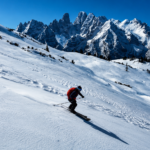
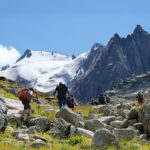
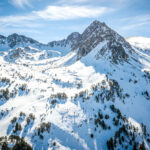
Mont Blanc, the highest peak in Western Europe at 4,809 meters (15,777 feet), is a dream destination for many mountaineers. While it surpasses other notable peaks in the Alps, such as the Matterhorn (4,478m) and Eiger (3,967m), it is considered more accessible to climbers due to its relatively moderate difficulty and established routes. Located in the French Alps, it presents both opportunities and challenges, depending on the chosen route and weather conditions. This article explores the main climbing routes, their difficulties, the mountain’s history, and some key facts for climbers.
Comparison of Climbing Routes
Mont Blanc offers several routes, each with distinct characteristics. Below is a comparison of the most popular ones:
| Route | Difficulty | Elevation Gain | Highlights | Best for |
|---|---|---|---|---|
| Gouter Route | Moderate | 1,500m up / 2,500m down | Most popular, safest route, minimal technical challenges | First-time high-altitude climbers |
| Grand Mulets Route | Challenging | 1,780m up / 2,500m down | Historic route, glacier crossing, less crowded | Ski mountaineers & glacier enthusiasts |
| Trois Monts Route | Most difficult | 1,200m up / 2,500m down | Exposed, technical, high-altitude challenge | Experienced mountaineers seeking adventure |
Route Comparison and Selection
The Gouter Route is the most frequented and recommended for those attempting Mont Blanc for the first time. It involves an overnight stay at the Gouter Hut before a summit attempt in the early morning. Despite being the “easiest” route, climbers must be prepared for rockfall hazards in the Grand Couloir section.
The Grand Mulets Route, often chosen by ski mountaineers in spring, offers a more isolated experience. However, due to glacier crossings, it requires technical skills in crevasse navigation.
The Trois Monts Route is the most demanding, featuring steep ascents and exposed ridges. This route is best suited for highly experienced climbers who are comfortable with technical mountaineering and altitude challenges.

A Brief History of Mont Blanc Climbing
Mont Blanc was first summited on August 8, 1786, by Jacques Balmat and Michel-Gabriel Paccard, marking the beginning of modern mountaineering. This historic ascent was encouraged by Horace-Bénédict de Saussure, a scientist eager to study the effects of altitude.
Over the centuries, Mont Blanc has remained an iconic climbing challenge, attracting adventurers from around the world. Today, it sees thousands of ascents each year, though the routes have become increasingly regulated to ensure safety and environmental preservation.
Interesting Facts About Mont Blanc
- Mont Blanc’s height is not constant and fluctuates due to snow accumulation and climate change.
- The mountain straddles the border of France and Italy, though the summit is officially in France.
- The first winter ascent was made in 1876 by a team led by Jules Simond.
- The Mont Blanc tunnel, completed in 1965, connects France and Italy beneath the mountain, spanning 11.6 km. This engineering marvel has significantly boosted tourism by providing easy access to the region and has also played a crucial role in facilitating trade between the two countries.
- Mont Blanc is known as Monte Bianco in Italian, meaning “White Mountain.”

FAQs (Frequently Asked Questions)
How long does it take to climb Mont Blanc? A typical ascent via the Gouter Route takes 2–3 days, with one night at a hut before the summit push. Faster and more experienced climbers may complete it in a single day.
Is Mont Blanc hard to climb? While Mont Blanc is not as technically demanding as other high-altitude climbs, it requires a good level of fitness, experience with glacier travel, and acclimatization to high altitudes.
Can you climb Mont Blanc without a guide? Yes, but only for experienced climbers. Many opt for a guide due to unpredictable weather, navigation challenges, and safety concerns.
What is the best time to climb Mont Blanc? The best season is June to September, with the most stable weather conditions in July and August. Climbing outside this period poses significant risks, including avalanches, extreme cold, and unpredictable storms, making ascents much more dangerous.
How much does it cost to climb Mont Blanc? Costs vary depending on whether you hire a guide. A guided ascent typically costs between €2,000 and €3,500, while an unguided climb mainly involves costs for accommodation, gear, and permits.
Can you climb Mont Blanc in a day? Yes, but it requires exceptional fitness and experience. Some ultra-runners and expert climbers attempt this, but most opt for a multi-day climb.
Final Thoughts
Climbing Mont Blanc is a rewarding but challenging experience. For those looking for similar but less difficult climbs, peaks like Gran Paradiso (4,061m) in Italy or the Breithorn (4,164m) in Switzerland offer great alternatives with stunning Alpine views and less technical challenges. Choosing the right route depends on your skills and experience level. Whether you are a first-time mountaineer or an experienced climber, proper preparation, acclimatization, and an understanding of the risks involved are essential for a successful ascent.
If you are considering this adventure, be sure to check local regulations, weather forecasts, and hut availability in advance!